Amber Alert: How the Wireless Emergency System Became the World’s Most Recognizable Child Safety Notification
Published: June 24, 2026
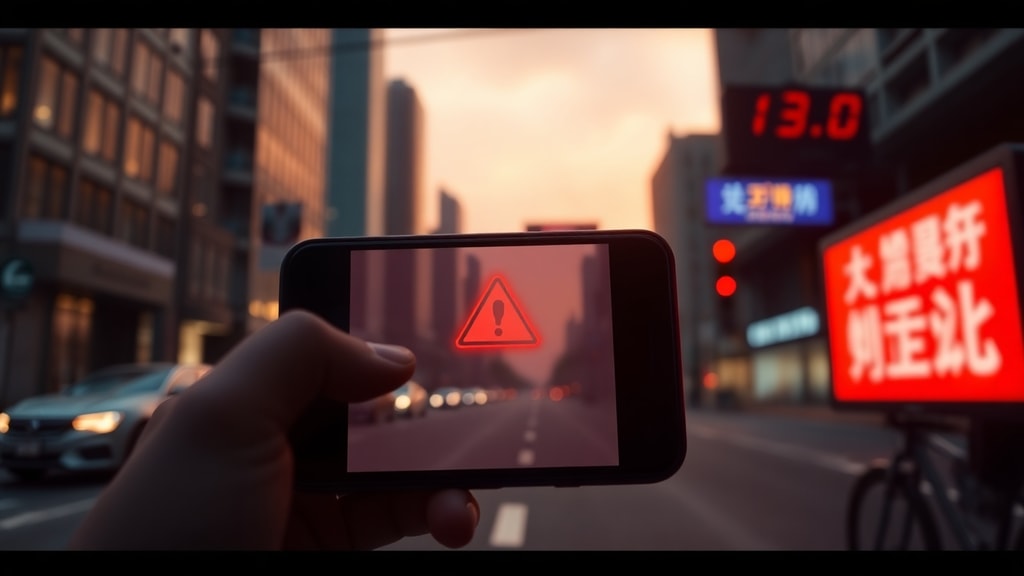
1) Introduction: What an Amber Alert *is* and who it serves
An **Amber Alert** is an emergency notification program used in the United States (and with similar frameworks in other countries) to rapidly disseminate information to the public when a child—most often a child believed to be abducted—is in imminent danger. In practical terms, Amber Alert is not a single broadcast channel. It is a **coordinated, multi-channel public warning system** triggered by law enforcement and designed to reach people quickly enough that they can respond—by calling tips, reporting sightings, or sharing the information.
The system is typically activated when a qualified agency determines that certain criteria are met, such as confirmation of an abduction (or strong evidence), a belief that the child is in danger, and sufficient identifying information to help the public (for example, the child’s description, suspected vehicle details, and the last known location). Once activated, alerts can appear on:
The people involved are not just police and broadcasters. In a modern Amber Alert ecosystem, **multiple institutions** collaborate—local law enforcement, state authorities, national standards bodies, wireless carriers, and media partners—to ensure that the message is consistent and actionable.
The message itself is designed for speed and clarity. It usually contains identifying features, location and time context, and a clear instruction: **do not attempt to intervene; provide information to law enforcement**. In that sense, Amber Alert is both a communications technology and a behavioral safety instruction system.
2) The Catalyst: Why Amber Alert is trending right now
Amber Alert is trending again because emergency communications are undergoing renewed scrutiny and modernization—particularly around the *reliability* and *responsiveness* of wireless public warnings. In recent cycles, news coverage and public debate have focused on:
This combination—renewed technological testing, public expectations shaped by other alert systems, and viral social-media dynamics—has pushed Amber Alert back into the spotlight. When a real-life abduction case triggers a widespread alert, the event quickly becomes a benchmark for the system’s performance. Even when the alert succeeds, the public conversation often turns to *how* the information traveled and whether it reached enough people quickly enough.
In short: Amber Alert is trending because it sits at the intersection of **urgent human stakes** and **fast-evolving communication infrastructure**.
3) Deep Dive: Context, history, and second-order implications
Amber Alert emerged from a simple but powerful premise: in child abduction cases, **time is the decisive variable**. The system is named after Amber Hagerman, a child abducted in 1996 whose case became a national call for faster public mobilization. That historical origin matters. Amber Alert was not built as a generic “watch this” broadcast—it was built as a **rapid, criteria-driven mobilization mechanism**.
Historical evolution: from local broadcasts to standardized wireless alerts
Early versions relied heavily on traditional media—radio, television, and roadway messaging. Over time, the system matured into a more standardized approach, with clearer activation criteria and improved coordination among agencies. The biggest transformation, however, came with the integration of wireless broadcast capabilities.
By leveraging wireless emergency messaging—an infrastructure designed for cell broadcast–style delivery—Amber Alerts gained a new characteristic: **they can reach people who are not watching TV or listening to radio**. That matters because abduction events frequently occur during commutes, errands, and daytime hours when not everyone is consuming the same media.
The technical shift also changed the social function of the alert. Amber Alert became something closer to a modern utility—like emergency weather warnings—yet with a distinct moral urgency and a direct call for actionable public assistance.
Second-order implications: trust, behavior, and information quality
1. **Trust is a fragile asset**
When emergency alerts become routine, people calibrate their attention. If an alert is perceived as late, inaccurate, or not sufficiently actionable, trust can erode. That erosion has a delayed effect: the next alert may receive less public attention, even if it is genuinely urgent. Amber Alert therefore has a credibility cost profile that differs from many other warnings.
2. **Quality of information is not just a technical issue—it’s a public-safety issue**
A second-order risk of rapid broadcasting is the temptation to include unverified details. But errors can create two harms: they can waste police resources through false leads and can also distract the public from the true situation. The system’s reliance on agency criteria exists to reduce that risk. Still, social media pressures can push “premature certainty.” The official message must therefore compete not only with the clock but also with the internet.
3. **The alert becomes a distributed investigation prompt**
Amber Alert does more than inform; it expands the field of observation. Cars with dash cams, pedestrians with smartphones, and local business owners can all become indirect sensors. That effectively turns the community into a temporary, geographically focused intelligence network.
4. **Privacy and ethics enter the conversation more than people expect**
While Amber Alerts typically rely on publicly shared descriptions, the very nature of wireless and location-aware behavior raises questions about how information is received, displayed, and sometimes recorded. Even if no sensitive data is contained in the alert, the ecosystem around alerting can intersect with broader debates about surveillance and digital footprints.
The system’s strengths are also its constraints
Amber Alert is praised for speed and visibility, but its effectiveness depends on several constraints:
In other words, the system is not purely a broadcasting technology. It is a behavioral and organizational system that happens to use networks.
4) Future Outlook: Bob’s prediction for where Amber Alert goes next
As a trend journalist, I see Amber Alert moving toward a future where **speed remains paramount**, but **context and verification** become more sophisticated.
My prediction is that the next generation of Amber Alert experiences will likely include:
Crucially, the system’s long-term success will depend on sustaining public trust. If Amber Alert becomes less frequent yet consistently accurate—and if it communicates with ever-greater clarity—then the public will treat it the way it was originally designed to be treated: not as background noise, but as a decisive, life-saving instruction.
Amber Alert started as a moral response to a single tragedy. Now it is a nationwide communications model. The next phase will not just be about technology. It will be about making urgent information reliably understandable at the exact moment it matters most.