Azerbaijan: The Energy Power, the Tech Upturn, and the Geopolitical Pivot Shaping the Future
Published: June 27, 2026
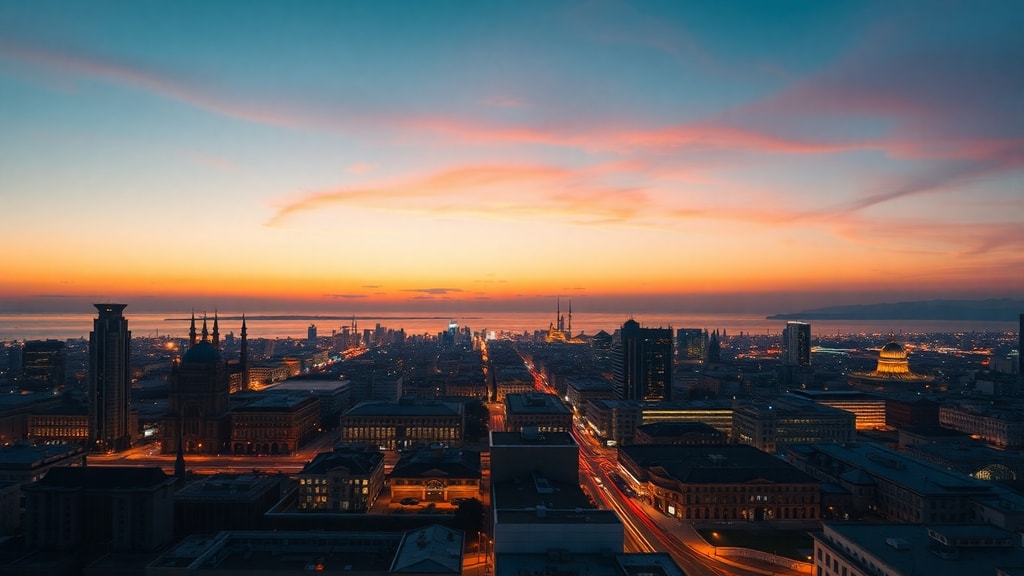
Introduction: Who Azerbaijan Is
Azerbaijan is a transcontinental country at the crossroads of Eastern Europe and Western Asia, strategically positioned along the Caspian Sea and bordered by Russia to the north, Georgia to the northwest, Armenia to the west, Iran to the south, and Turkey across the Caspian via maritime links. Officially the Republic of Azerbaijan, it is best understood not as a single-issue energy exporter, but as a state with a distinct geographic advantage: it sits between major energy production regions and large consumer markets, while also serving as a potential bridge between Europe and Asia.
At the heart of Azerbaijan’s modern prominence is its energy system—oil and natural gas fields developed over decades, concentrated particularly in the Caspian basin. Yet the country is also a society in motion. Baku, its capital and largest city, has become a symbol of rapid urban development alongside a cultural heritage that includes Azerbaijani music, traditional craftsmanship, and the country’s long-standing role in Silk Road-era trade routes.
Politically and economically, Azerbaijan is a “system of linkages”: domestic governance decisions, regional security calculations, and international market access all feed into one another. The state’s strategic challenge has been consistent—how to convert resource wealth into durable modernization while reducing vulnerability to price cycles and external pressure. That balancing act helps explain why Azerbaijan’s trajectory is increasingly relevant beyond its immediate region.
To understand Azerbaijan fully, it is also crucial to recognize the realities of its neighborhood. The South Caucasus is a corridor of competing interests where borders, transit routes, and security guarantees can change quickly. Azerbaijan’s identity, therefore, is defined by both opportunity and friction: opportunity from connectivity and energy logistics, friction from unresolved disputes and the constant re-negotiation of regional influence.
The Catalyst: Why Azerbaijan Is Trending Right Now
Azerbaijan is trending now for a cluster of converging reasons rather than one isolated event. In recent months, heightened attention has focused on three interlocking themes: (1) energy market resilience and supply diversification, (2) infrastructure and transport connectivity across the region, and (3) shifting geopolitical calculations surrounding the South Caucasus.
First, the world remains preoccupied with energy security—especially the reliability of supply routes and the durability of investment pipelines. Azerbaijan, long associated with oil and gas output, is increasingly discussed as a key node in the broader conversation about export corridors and long-term contractual stability. Even when global headlines fixate on other producers, Azerbaijan often surfaces in analytical debates because its infrastructure—pipelines, terminal capacity, and logistics arrangements—makes it relevant to how energy flows could adapt under pressure.
Second, Azerbaijan’s position as a transit and connectivity hub has become more visible as governments and companies re-evaluate routes for freight and strategic materials. When supply chains are stressed, alternative corridors gain urgency. Azerbaijan’s geographic placement—especially in relation to Caspian transport and overland linkages—places it in the conversation for routes that can reduce dependence on any single chokepoint.
Third, regional diplomacy and post-conflict stabilization dynamics continue to draw attention. Without needing sensationalism, the South Caucasus remains a place where policy shifts can have outsized effects on regional trade, cross-border projects, and investor risk perception. Azerbaijan is trending because its choices—about infrastructure, cooperation frameworks, and regional engagement—are viewed as indicators for how the neighborhood might stabilize or re-compress.
Deep Dive: Context, History, and Second-Order Implications
Azerbaijan’s rise in global attention begins with the Caspian basin’s role in the energy map. After the Soviet era, newly independent states confronted a question that still shapes Azerbaijan’s strategy: whether hydrocarbon wealth would become a pathway to modernization or a trap of dependency. For Azerbaijan, the answer has been a long experiment—one marked by significant investment, periodic global price turbulence, and a continuous effort to keep export channels diversified.
Historically, Azerbaijan’s energy strategy has aimed at multiple outcomes at once: maximize revenue, secure long-term buyers, and reduce geopolitical bottlenecks. This has meant negotiating pipeline routes and export partnerships that can withstand changing regional constraints. Over time, this created a kind of “energy diplomacy”—an approach where commercial infrastructure is inseparable from foreign policy.
But energy is only the first-order layer. The deeper story is what energy enables. Resource revenue can fund modernization of cities, ports, power grids, and public institutions. It can also support education, industrial programs, and technology adoption—though results vary and depend on governance quality, economic diversification, and the ability to convert spending into productivity.
In Azerbaijan’s case, the second-order implications are increasingly visible: when a country is connected to major transport corridors and export networks, it attracts not just energy investment, but also logistics know-how, services, and manufacturing opportunities that cluster around infrastructure. Ports and transit corridors create demand for shipping operations, warehousing, compliance services, and maintenance ecosystems. Over time, these can seed broader economic capabilities.
There is also a technology dimension, even if Azerbaijan is not primarily framed as a “tech nation” in the same way as some smaller states. Digital systems increasingly matter for customs efficiency, supply chain visibility, and cross-border documentation—areas where improvements can lower friction for trade. In a corridor economy, small administrative efficiencies can become outsized economic advantages.
At the same time, Azerbaijan’s modernization is not happening in a vacuum. The country must navigate an environment where international sanctions regimes, shifting alliances, and security spillovers can affect financing and project timelines. The second-order risk is that uncertainty can slow down not only investment, but also the willingness of firms to commit to long-term talent development.
Another critical analytical point is energy transition. While the world debates speed and sequencing, countries that rely on hydrocarbons are under pressure to prove they can manage a credible transition path—whether through efficiency, gas market strategies, electrification planning, or investment in renewable integration. Azerbaijan’s challenge is to avoid a binary narrative (“oil era ends” versus “oil remains forever”) and instead design an adaptive portfolio: monetize existing assets while preparing new economic engines that can sustain growth when global demand patterns evolve.
Finally, Azerbaijan’s regional role carries implications for diplomacy and business confidence. When border and transit conditions are predictable, investment follows. When uncertainty rises, capital becomes more risk-sensitive. That’s why Azerbaijan’s stability and policy clarity are not merely domestic issues; they shape how third parties price regional opportunity.
Future Outlook: Bob’s Prediction for Azerbaijan’s Next Strategic Phase
Looking ahead, Azerbaijan’s most likely trajectory is a controlled expansion of its role as a corridor state—one that pairs energy logistics with broader connectivity ambitions, while selectively modernizing its economic base beyond hydrocarbons. My prediction is that Azerbaijan will increasingly be judged by three metrics rather than one: (1) how reliably it delivers on infrastructure and trade facilitation, (2) whether it can diversify investment into technology-enabled services and higher value industry, and (3) how effectively it maintains regional stability signals that reduce perceived risk for partners.
In the next phase, the countries that benefit most from Azerbaijan’s geography won’t be those chasing headlines, but those building durable operational relationships—shipping, logistics, industrial supply chains, and energy infrastructure upgrades. Azerbaijan, meanwhile, will likely continue to treat geopolitics as an economic variable. If it succeeds in combining investment discipline with administrative modernization, it will not just remain an energy exporter—it will consolidate its status as a regional platform where energy, transport, and technology reinforce each other.
That is the real story behind the buzz: Azerbaijan is trending because it sits at the intersection where global energy concerns meet the practical mechanics of trade, and where diplomacy shapes whether infrastructure becomes opportunity—or remains a delayed promise.