Bahrain’s Quiet Power Shift: How a Small Island State Is Rewiring the Future of the Gulf
Published: June 25, 2026
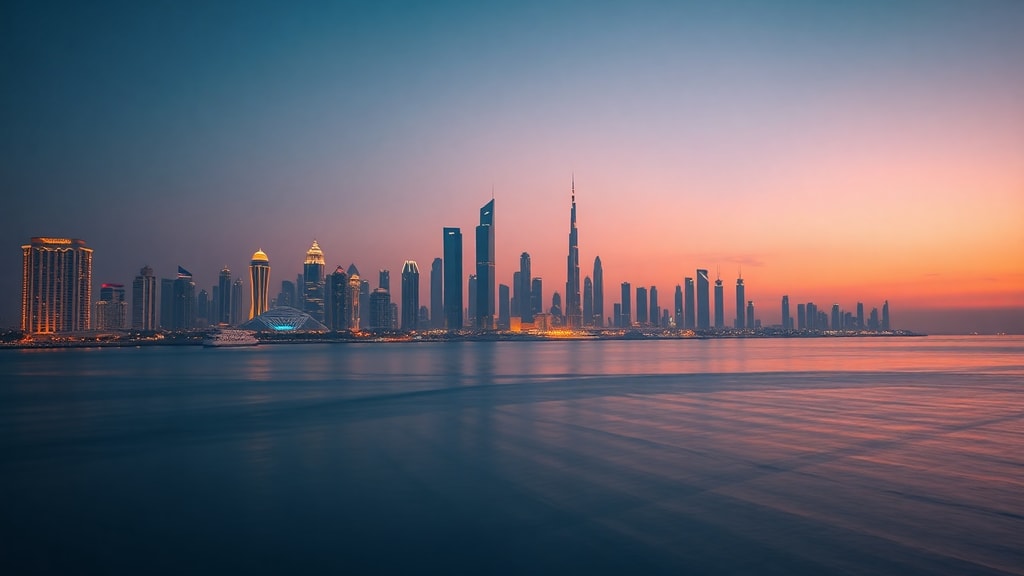
1) Introduction: What “Bahrain” Actually Is
Bahrain is an island kingdom in the Arabian Gulf, lying off the eastern coast of Saudi Arabia. It is officially the Kingdom of Bahrain and is geographically compact—its land area is roughly comparable to a mid-sized metropolitan region—but it punches above its weight in trade, finance, and regional diplomacy. The country’s capital is Manama, a coastal city that has long served as a commercial and administrative hub.
What makes Bahrain particularly distinctive is the combination of: (1) its strategic location at the mouth of key Gulf shipping routes; (2) its early integration into regional finance and merchant trade networks; and (3) a persistent push to diversify the economy beyond hydrocarbons. While Bahrain shares broad Gulf cultural and geopolitical themes with its neighbors, its policy style often appears more nimble and experimentation-friendly—partly because its scale forces prioritization, and partly because its leadership has repeatedly treated infrastructure and regulatory upgrades as national competitiveness.
Bahrain’s economy has historically been anchored in oil and natural gas, but the country has spent years building capabilities in services, logistics, and finance. Over time, it has cultivated a reputation for business-friendly regulation relative to many regional peers, while also investing in digital and smart-city initiatives. Socially, Bahrain is known for a blend of traditional Gulf communities and a cosmopolitan urban life shaped by trade and regional migration.
In short, Bahrain is not trending merely because of a headline event—it is drawing attention because its internal modernization choices and external partnerships are beginning to look like a coherent strategy rather than a patchwork of reforms.
2) The Catalyst: Why Bahrain Is Trending Right Now
Bahrain is trending right now for a clear cluster of reasons that have converged in recent years and are now becoming more visible in global coverage:
1. **High-profile infrastructure and energy upgrades**: Regional projects tied to electricity, water, and energy efficiency—along with broader upgrades across ports, logistics, and industrial capacity—are increasingly discussed as the Gulf transitions from pure extraction toward system-building.
2. **Acceleration of economic diversification narratives**: Bahrain’s diversification agenda—moving toward sectors beyond oil—has gained renewed attention as regional investors compare how different Gulf states respond to volatility in energy prices and shifting global demand.
3. **Bahrain’s growing visibility as a regional finance and connectivity node**: International media and business communities increasingly treat Bahrain as a platform for services in the wider Gulf and for cross-regional investment flows.
4. **Regional geopolitical recalibration**: The Gulf remains an arena of strategic alignment and re-alignment. Small states like Bahrain are compelled to demonstrate resilience and relevance through diplomacy, security cooperation, and infrastructure that improves regional interdependence.
The trigger for “trend status” is therefore not a single viral event. Instead, it is the cumulative effect of upgraded capacity, sustained policy messaging, and Bahrain’s role in regional supply chains becoming easier for outsiders to observe and measure.
3) Deep Dive: Context, History, and Second-Order Implications
A historical lens: a trading outpost that never stopped modernizing
Bahrain’s strategic position has long made it a commercial crossroads. Long before the modern oil era, the islands functioned as a trading node. That identity—merchant, intermediary, connector—carried forward into the 20th century and beyond. When oil came to prominence, Bahrain built on its service-oriented instincts to avoid becoming solely a producer economy.
The result is that Bahrain’s modernization has never been only about technology. It has been about governance capacity: the ability to attract capital, regulate markets, and build “trust infrastructure” that allows firms to operate confidently. In Gulf economies where liquidity, banking reliability, and legal clarity matter as much as physical assets, Bahrain’s historical emphasis on financial services and commerce became a durable advantage.
Why diversification is difficult—and why Bahrain matters
Economic diversification across the Gulf is widely discussed, but the hardest part is not stating the goal; it is building the credible institutions that make new sectors competitive. Diversification requires:
Bahrain’s “small scale” can be a disadvantage—limited natural resources and a narrower domestic market. Yet second-order effects can favor smaller states: with less geographic sprawl and fewer layers of bureaucratic inertia, reforms can sometimes move faster, and national strategies can be more tightly focused.
This is where Bahrain’s visibility grows. Observers see a country designing a future economy in parallel with its energy reality, rather than waiting for oil revenues to decline before reacting.
The second-order implication: Bahrain as a governance and connectivity model
The deeper story is that Bahrain is becoming a model—at least in messaging—for how Gulf states can shift from extractive strength to system strength.
Second-order implications include:
1. **Finance becomes infrastructure**: In knowledge economies, regulation, banking, compliance, and contracting systems act like physical infrastructure. Bahrain’s increasing prominence in services means it could benefit from capital flows that prioritize legal clarity and operational convenience.
2. **Energy transition at the grid level**: The future of energy is not only about “green generation.” It is about reliability, grid modernization, water management, and efficiency. Bahrain’s infrastructure investments signal a move toward resilience—an increasingly valued attribute as climate pressures and demand volatility rise.
3. **Talent and corporate ecosystems**: If Bahrain succeeds in attracting firms and supporting them with skilled labor and professional services, it can compound growth through networks—universities, training programs, incubators, and specialized industries.
4. **Regional diplomacy as economic strategy**: Small states cannot afford to be peripheral in geopolitics. Bahrain’s diplomacy and security cooperation are not separate from economic development; they are part of the environment in which trade and investment decisions are made.
A note on perception vs. performance
Bahrain’s brand has often been described as “regional—yet distinctive,” a phrasing that can sound vague. But performance is what converts perception into durable outcomes. International attention tends to intensify when investors see measurable progress: project completions, policy reforms, and consistent frameworks that reduce uncertainty.
That is why the current trend matters. It suggests observers are moving from narrative-based evaluation to evidence-based tracking.
4) Future Outlook: Bob’s Forward-Looking Prediction
Looking ahead, I expect Bahrain to consolidate its role as a **high-velocity services and infrastructure state**—a country where finance, logistics, and technology-enabled governance reinforce each other. The most likely trajectory is not a dramatic reinvention overnight, but a **sequence of compounding reforms** that turn the island’s strategic location into long-term economic leverage.
My prediction is that within the next few years Bahrain will increasingly be evaluated alongside larger Gulf economies not because it will outsize them, but because it will offer a credible, efficient pathway for investors seeking stability, connectivity, and institutional clarity. If Bahrain continues to upgrade infrastructure and align education and regulatory systems with diversification targets, it will remain a compelling micro-case study of how a small country can reshape its future by building systems—not just industries.
In the Gulf’s shifting landscape, Bahrain’s quiet power shift is likely to be one of the region’s more durable stories: less loud than a headline, but steady enough to change outcomes.