BBC: How Britain’s Public Broadcaster Became a Global Template for Trust in the Age of Algorithms
Published: August 10, 2026
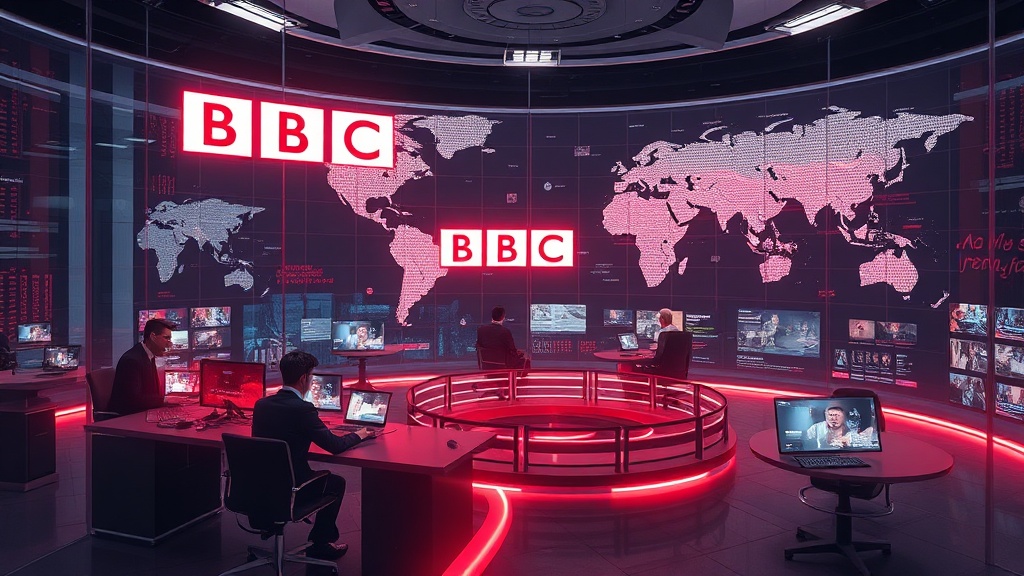
1) Introduction: What the BBC Is—And Why It Matters
The **BBC**—the **British Broadcasting Corporation**—is the United Kingdom’s flagship public-service media organization, funded primarily by the public through the licence fee and guided by an explicit mission to inform, educate, and entertain, while maintaining editorial independence. Unlike commercial broadcasters whose incentives are dominated by advertising demand or subscription conversion, the BBC is structured as a public institution with a mandate that reaches beyond short-term audience metrics.
In practical terms, the BBC is a hybrid of three things:
1. **A newsroom with global reach.** Its reporting spans international affairs, economics, science, culture, and breaking news, supported by a network of correspondents and bureaus.
2. **A standards-driven platform.** The BBC is known for editorial rules, accuracy expectations, and formal governance arrangements—elements that have been central to how audiences interpret “truth” in a crowded media environment.
3. **A distribution engine across formats.** Over time, the BBC has extended from radio and television into online publishing, mobile applications, streaming-style experiences, podcasts, and live digital programming. This evolution has turned the BBC from a single broadcaster into a multi-channel content ecosystem.
Crucially, the BBC is also a political and cultural institution. Its funding model, governance, and editorial independence are frequently debated in the UK, and its influence is felt worldwide. When international audiences talk about “reliable reporting,” they often benchmark against institutions like the BBC—an implicit recognition that public-service journalism can still set global expectations.
2) The Catalyst: Why “BBC” Is Trending Right Now
BBC has been trending because public trust in media is under intense strain—and the BBC is at the center of the debate. The immediate triggers have been a combination of:
Put simply: the world is talking about the BBC not because it is only “in the news,” but because it represents a live experiment in whether a public institution can remain authoritative when the attention economy is governed by platforms.
3) Deep Dive: Context, History, and Second-Order Implications
A brief historical anchor
The BBC was created to provide comprehensive broadcasting with a public purpose—an antidote to the purely commercial logic of media. For decades, it became a reference point for how national institutions can curate news, explain complex events, and maintain consistent production quality. The BBC’s historical strength lies in the relationship between **institutional continuity** and **editorial discipline**.
However, the modern media environment did not slow down—it fragmented. Audiences acquired many alternatives: global broadcasters, independent creators, social platforms, and personalized feeds. The first-order effect of this fragmentation is obvious: competition for attention. The second-order effect is more profound: **audiences increasingly encounter news through intermediaries** (algorithms, social networks, aggregators) that may not share the BBC’s standards.
The algorithmic problem: trust versus distribution
The algorithmic era changes the “physics” of journalism. In older models, broadcasters decided what mattered, then distributed it. In newer models, distribution often determines what gets seen, and visibility can shape perceived credibility. This creates a risk where **what performs** becomes conflated with **what is true**.
The BBC’s relevance, therefore, is not only about reporting facts—it’s about sustaining a **trust architecture**. Trust architecture includes:
When a public broadcaster maintains these structures at scale—across podcasts, video, live coverage, and digital reporting—it becomes a counterweight to the volatility of algorithm-driven virality.
The public-service funding debate: independence under pressure
A second major analytical dimension is funding. The licence fee model (and related policy questions) matters because it influences perceived independence. Every time there is a political argument about whether the BBC should be reshaped, budgeted differently, or restructured, it triggers a broader question for audiences globally: **Can media be both public and independent?**
The second-order implication is that trust is not a static asset; it is continually negotiated. If the BBC is seen to be too politically constrained, its editorial credibility can erode. If it is seen as too detached from public expectations, it can lose cultural legitimacy. This balancing act is one reason BBC remains a recurring topic in public discourse.
Global template: the BBC as a model, not just a national brand
Internationally, the BBC functions like a template that other systems implicitly measure themselves against. Many countries have public-service ambitions; few replicate the BBC’s combination of production scale, global reach, and brand recognition for verification.
Yet the template is under revision. Modern public broadcasters must address:
The BBC’s challenge—and its opportunity—is to show that public-service journalism can keep its identity even as it adopts new formats and distribution methods.
Why this is more than a media story
Media institutions now sit at the intersection of technology, politics, and social psychology. When audiences question whether news is accurate, they often also question whether society can coordinate around facts. This is where the BBC becomes a barometer.
A strong BBC does more than inform—it can reduce the friction of disagreement. By delivering verified information and contextual explanation, it can help societies avoid informational collapse during crises. That “second-order” societal function is the real reason the BBC still commands attention beyond the UK.
4) Future Outlook: Bob’s Prediction for the BBC’s Next Chapter
Looking ahead, I expect the BBC to intensify a strategic focus on **trust-preserving innovation** rather than novelty for novelty’s sake. In the coming years, the BBC’s competitive arena will be less about winning a single platform and more about defending a coherent identity across platforms—where editorial standards are unmistakable whether content appears on a TV screen, a podcast app, or a short video feed.
My prediction is that the BBC will increasingly invest in mechanisms that make verification visible: clearer sourcing, stronger corrections ecosystems, and more transparent editorial processes tailored for digital audiences who have learned to doubt without necessarily being cynical. If the BBC succeeds, it will not merely remain a broadcaster; it will become an enduring global reference point for how public journalism can coexist with algorithmic distribution.
If it fails, the consequence will be broader than reputational damage: it could signal that public-service models struggle to survive attention economies—at which point trust will fragment and the cost of misinformation will rise.
Either way, “BBC” will remain a meaningful keyword, because it stands for a question the world cannot avoid: **who deserves to be believed when everyone can publish—and when everyone can be amplified?**