Bryce James: The Basketball Lineage, the Media Spotlight, and What Comes Next
Published: June 25, 2026
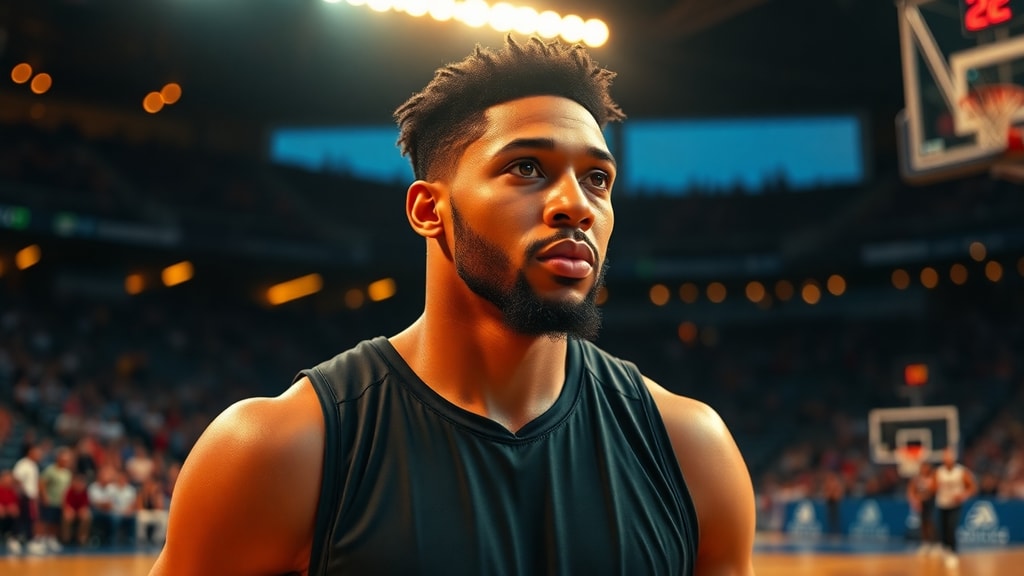
Introduction: Who Bryce James Is, Exactly
Bryce James is an American basketball player and one of the most closely watched young athletes in contemporary sports culture. He is the second eldest son of LeBron James, the NBA’s all-time scoring icon and a global brand in his own right, and Savannah James. While “Bryce James” may sound, to some readers, like a name that appeared suddenly in highlight reels, his public profile is the product of a specific convergence: family basketball heritage, highly visible development pathways, and an always-on media environment that turns athletic progress into a continuous narrative.
Unlike many elite prospects who enter the public imagination only after a national tournament breakthrough, Bryce’s visibility has long been shaped by his father’s prominence. LeBron James is not merely a basketball legend; he is also a media heavyweight whose influence extends into youth sports and lifestyle branding. In that environment, Bryce has been developing without the usual anonymity that protects many teen athletes from immediate global scrutiny.
From a purely basketball perspective, Bryce James represents the next generational stage of a modern sports pipeline. His journey is not only about points and rebounds; it is also about skill acquisition, physical development, and the ability to translate youth-level dominance into higher levels of competition—high school, elite amateur circuits, and eventually college or professional evaluation. In the current era, that translation is as much about decision-making under pressure as it is about raw athletic traits.
The Catalyst: Why Bryce James Is Trending Right Now
The reason Bryce James is trending right now is not a single isolated event—it is the recurring media cycle that appears whenever a young prospect’s performances, affiliations, or recruiting momentum make news. In 2024 and beyond, the sports world has been increasingly captivated by “second-wave” athletes: the younger relatives and teammates connected to established stars whose careers follow a visible timetable.
Bryce James benefits from multiple catalysts simultaneously:
1. **The ongoing expansion of the LeBron “world.”** As LeBron remains active and influential, his family’s public presence continues to draw attention from sports platforms, lifestyle outlets, and basketball communities.
2. **Youth tournaments and highlight culture.** Modern sports reporting is driven by clip-based discovery. A single standout sequence—an athletic finish, a defensive stop, a quick pull-up—can travel far faster than full-game scouting reports.
3. **The recruiting narrative machine.** Even before a player’s senior-year peak, fans now follow prospects through early evaluations, training updates, and social media engagement. Bryce is part of that ecosystem.
4. **Viral framing of legacy.** Social media repeatedly contextualizes Bryce through the “legacy lens”—what his father’s career suggests about his future. That framing is irresistible for viewers and therefore persistent in the news cycle.
In short, Bryce James is trending because the modern sports information system—especially on social platforms—has made athletic development a live event. When a prominent family name meets continuous coverage, the public’s attention becomes compounding rather than episodic.
Deep Dive: Context, History, and Second-Order Implications
To understand Bryce James, it helps to place him inside the evolution of basketball’s talent pipeline and sports media.
The historical shift: from scouts to simulators
Historically, the path to recognition for elite prospects involved slow-moving scouting networks: local coaches, regional tournaments, and a handful of televised national showcases. Information traveled at the speed of print media and word of mouth.
Now, the pipeline runs faster and more publicly. A prospect’s skillset can be documented by amateur film, analyzed by fans and editors, and circulated internationally within hours. This changes the nature of development. Athletes do not only train; they also manage visibility.
Why the “legacy” lens is both useful and dangerous
A famous parent can provide resources—access to top training, mentorship, and an intuitive understanding of the professional game’s habits. LeBron James’ experience, in particular, offers a blueprint for elite preparation.
But the legacy lens comes with risks:
Bryce’s situation sits at the intersection of privilege and vulnerability. Access does not eliminate psychological pressure; it can even intensify it.
Second-order implications for basketball culture
Bryce James also signals broader cultural shifts in sport:
1. **The creation of global youth fandom.** Fans around the world are increasingly investing in athletes at younger ages, turning youth sport into a long-form storyline.
2. **More early specialization debates.** When prospects are heavily tracked, conversations intensify around training intensity, specialization, and health—issues that affect long-term performance.
3. **The recruiting economy is becoming content-driven.** Teams and scouts still matter, but media attention increasingly shapes how prospects are perceived before comprehensive evaluation occurs.
4. **Family dynasties as modern entertainment.** Sports dynasties are no longer only athletic phenomena; they are cultural properties. That can bring opportunities, but it also reshapes identity formation for the younger generation.
In Bob’s view as a global trend journalist, this is the key analytical point: Bryce James is not just a player inside a basketball timeline. He is a data point in the changing relationship between sport, celebrity, and instant global distribution.
Future Outlook: Bob’s Prediction on What Comes Next
Looking ahead, Bryce James’ next phase will likely be defined less by a single breakout moment and more by consistency—how quickly he converts youth momentum into repeatable, coachable performance against stronger competition.
My forward-looking prediction is this: Bryce will become a mainstream basketball figure not only because of his pedigree, but because he will demonstrate the modern “two-track” mastery required in today’s game. That means:
If Bryce James succeeds at that two-track standard, he will transcend the usual fate of high-visibility prospects who are evaluated prematurely. Instead of being defined primarily by who his father is, he will be defined by what he can do—at full speed, under scrutiny, with outcomes that stand up to time.
That is the difference between attention and impact. And that is what the basketball world should watch for next.