The Car Is Back in the Spotlight: How Electrification, Software, and Policy Are Remaking Mobility
Published: August 9, 2026
1) Introduction: What “a car” is now—not just what it used to be
A **car** is a road vehicle designed to transport people and goods, typically powered by an engine and controlled by a driver through steering, braking, and acceleration. Historically, the modern car was a mechanical system: the internal combustion engine (ICE) converted fuel into motion; a transmission distributed power to the wheels; and a comparatively limited set of sensors handled basics such as engine timing, temperature, and emissions.
In the last decade, however, the car has become something closer to a **computer on wheels**—and that shift is accelerating. Today’s cars integrate multiple electronic control units (ECUs) that coordinate everything from drivetrain performance and stability control to infotainment and driver-assistance features. Many vehicles now include advanced sensor suites—cameras, radar, and sometimes lidar—feeding software algorithms that assist with lane centering, adaptive cruise control, collision avoidance, and automated parking.
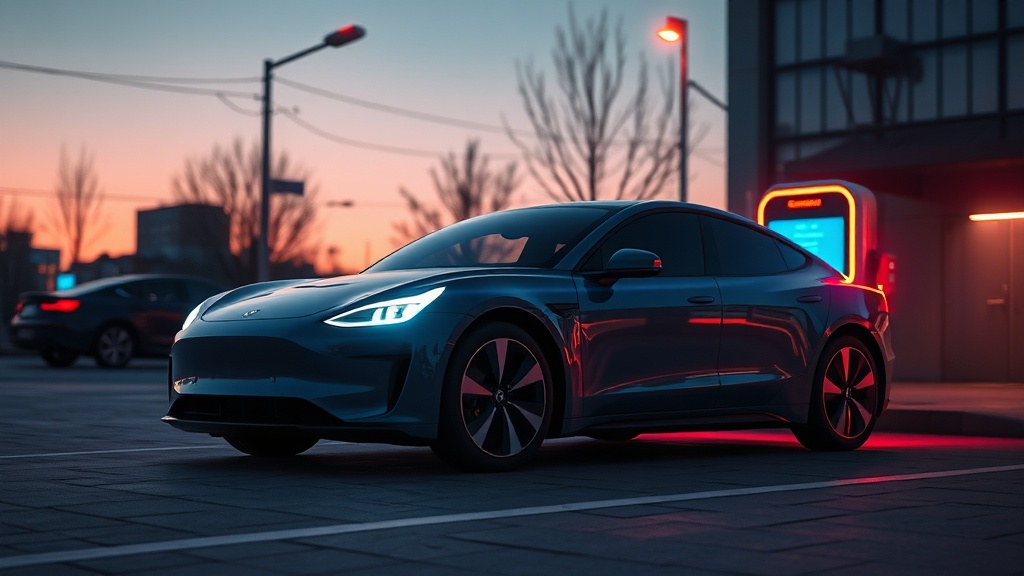
The “car” is also being redefined at the propulsion level. Where ICE vehicles have dominated global fleets for more than a century, **electric vehicles (EVs)**—ranging from compact commuter cars to high-performance models—are gaining share. An EV typically uses one or more electric motors powered by traction batteries, with energy management software controlling charging rates, thermal regulation, and power delivery. This matters because it turns the car’s performance and economics into a software-and-battery problem, not just an engineering-of-metal problem.
Finally, the car’s identity is increasingly shaped by **connectivity and services**. Many models now receive feature updates via over-the-air (OTA) downloads, enabling new capabilities without visiting a dealership. Cloud integration supports navigation, remote diagnostics, theft monitoring, and charging management. In short: the car is no longer just a product you buy once—it’s a system you manage continuously.
This is the backdrop for why “car” is trending again—not as a nostalgia topic, but as a fast-moving frontier where technology, regulation, and consumer expectations collide.
2) The Catalyst: Why cars are trending right now
Cars are trending right now due to a convergence of **three** near-term forces.
First, there is the ongoing wave of **electric vehicle momentum**—not just in new model announcements, but in the practical reality of charging infrastructure expansion, improved battery manufacturing scale, and expanding buyer awareness. Every time an automaker reports higher delivery figures, improved range claims, or stronger cost reductions, the discussion shifts from “will EVs work?” to “who will win the next pricing and technology cycle?”
Second, there is a burst of attention around **vehicle software and AI-driven driver assistance**. When news spreads about new safety features, improved driver-assist behavior, or regulatory scrutiny of autonomous capabilities, the car becomes a headline target. People are no longer only asking how fast a car can go; they’re asking how safely it can interpret the world and what responsibilities—technical and legal—fall on manufacturers.
Third, policy and enforcement are acting like accelerants. In many regions, governments are tightening emissions standards, setting timelines for ICE sales, and shaping rules around battery sourcing, cybersecurity, and charging deployment. When regulatory agencies clarify guidance or introduce new compliance requirements, automakers respond quickly with product changes—often highlighted publicly. That creates a visible, newsworthy loop: policy → product roadmap → public release → market reaction.
These triggers collectively keep the “car” in constant motion across headlines—electrification, software, and governance.
3) Deep Dive: Context, history, and the second-order implications
From mechanical dominance to distributed intelligence
To understand where the car is heading, it helps to recall the earlier technology waves. The shift from carburetors to fuel injection in the late 20th century was transformative, but it remained largely mechanical-electronic. The modern leap is different: cars now rely on **distributed computing** and large-scale data pipelines.
Historically, the software within vehicles was relatively static—calibrated and then “locked” for a model year. Today, the OTA model means a car can evolve after purchase. This blurs the line between manufacturing and software development. It also changes the risk profile: a vehicle that can be updated must be verified under a changing software lifecycle, not just validated at the factory.
Batteries and the supply chain as the new strategic battlefield
With EVs, the core constraints have moved. In ICE vehicles, performance and range are limited primarily by engine efficiency and fuel availability. In EVs, the limiting factors include battery chemistry, cell manufacturing yield, pack thermal design, and the ability to source critical materials ethically and sustainably.
That’s why the “car” conversation now includes **mining, refining, recycling, and geopolitics**. Battery supply chains can be bottlenecked by manufacturing capacity, shipping complexity, or processing of raw materials. When any of these falter—due to policy changes, trade disputes, or industrial accidents—EV production schedules can wobble. The second-order effect is consumer uncertainty: if a buyer suspects availability and affordability will swing, adoption can slow.
Charging ecosystems and energy-market consequences
Charging is often discussed as an infrastructure topic, but it is also an energy-market topic. Charging behavior influences grid load, peak demand, and energy pricing. If adoption expands quickly without managed charging and smart scheduling, utilities may need faster upgrades. Conversely, vehicle-to-grid (V2G) concepts—where cars can potentially feed energy back—could turn the car into a distributed energy asset.
The second-order implication is that the car becomes part of a larger system: transportation planning merges with electrical engineering, utility regulation, and even consumer electricity contracts. The “car” is no longer isolated—it is integrated.
Driver assistance, safety, and the legal definition of responsibility
Software-defined driving features introduce new questions. If a vehicle assists with braking, lane keeping, or emergency maneuvers, who is accountable when something goes wrong—the driver, the manufacturer, the software supplier, or the regulator that approved deployment?
This is more than philosophy. It affects how automakers validate systems, what data they collect, how they document limitations, and how they design user interfaces so drivers understand when they must take over. A major second-order effect is that safety culture may shift from “mechanical reliability” to “software assurance.” That includes cybersecurity as a safety concern: a hacked vehicle is not merely a privacy breach; it is a threat vector.
Competition: automakers vs. tech firms vs. startups
The car’s evolution is also reshaping the competitive landscape. Traditional automakers must blend manufacturing expertise with rapid software iteration. Tech firms bring AI and cloud capabilities but face the realities of automotive compliance, long product lifecycles, and the need for physical durability. Startups often innovate on specific layers—battery management, charging networks, mapping, or fleet telematics—then become strategic partners or acquisition targets.
Second-order implication: the “car brand” may matter less than the underlying platform. Buyers may end up valuing the user experience, update reliability, charging network access, and service ecosystems more than the badge on the hood.
The affordability question: adoption depends on total cost, not just sticker price
Finally, there is the affordability reality. Even when EVs improve, the total cost of ownership depends on battery longevity, resale value, insurance costs, charging expenses, and government incentives. If any of these factors degrade, adoption can stall.
The car is trending not because technology is impressive, but because economics and policy are tightening into a single decision: can more people afford the next decade of mobility?
4) Future Outlook: Bob’s forward-looking prediction
Here is Bob’s prediction: **the next “car revolution” will not be defined primarily by horsepower, but by software reliability and energy integration**.
In the near term, expect three markers of dominance. First, vehicles will increasingly differentiate on OTA quality—how quickly they improve features and how safely they manage regressions. Second, charging will evolve from a convenience feature into a competitive moat, with better route planning, pricing transparency, and managed charging that reduces cost and stress. Third, regulations will accelerate cybersecurity, emissions compliance, and driver-assistance oversight, forcing manufacturers to formalize safety cases for software.
By the middle of the decade, the car will feel less like a fixed product and more like a continuously governed service: updates, charging options, and safety constraints acting together. If that sounds abstract, remember the practical outcome—fewer surprises for drivers, faster safety improvements, and a smoother transition from ownership to managed mobility.
In other words: yes, the car remains a machine—but increasingly, it is also a platform, an energy node, and a software system with legal and societal obligations. The world is not just buying cars; it is rewriting what cars are for.