Dodgers in 2026: How a Baseball Brand Became a Global Media Engine
Published: August 11, 2026
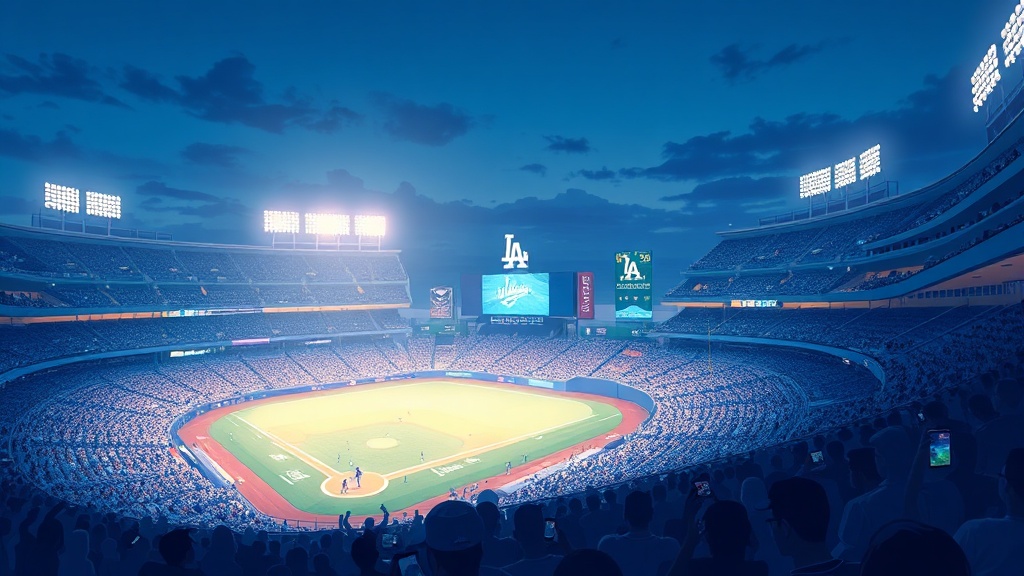
1) Introduction: What “Dodgers” Means—A Team, a System, and a Global Brand
When people say **“Dodgers,”** they usually mean the **Los Angeles Dodgers**, one of Major League Baseball’s most storied franchises. Founded in Brooklyn and rooted in generations of fan identity, the Dodgers represent far more than a 162-game schedule. They are a **modern sports institution** that blends athletic performance, business strategy, and media production into a single, coordinated ecosystem.
At the organizational level, the Dodgers have become a **template for how elite franchises operate in the analytics era**. Their baseball operations are designed to continuously evaluate talent, optimize roster construction, and manage player development across the farm system and beyond. But that technical work is only one layer of their influence.
The Dodgers also function as a **global brand** with multilingual reach and a media footprint that extends past traditional broadcast. Their content strategy—game storytelling, player narratives, behind-the-scenes access, and highlights distributed at scale—turns every season into an ongoing worldwide news cycle. In practice, this means the Dodgers behave like a **sports network** as much as a baseball club.
And because baseball is increasingly competing for attention against streaming platforms, esports, and short-form social media, the Dodgers’ ability to remain culturally visible matters. They do not rely solely on winning. They build **repeatable moments**: milestone games, star-player arcs, rivalries with high narrative energy, and community-driven public events that translate into audience loyalty.
So, “Dodgers” is the shorthand for a complex machine: a professional baseball team, a data-centric talent engine, and a globally distributed entertainment brand.
2) The Catalyst: Why “Dodgers” Is Trending Right Now
The Dodgers are trending now for a simple reason: **they sit at the intersection of performance, celebrity, and competitive urgency**.
In recent coverage cycles, the Dodgers have repeatedly appeared because of three converging triggers:
1. **High-stakes offseason and roster speculation**: Baseball’s calendar may seem slow to outsiders, but fans follow every contract negotiation, trade rumor, and prospect promotion as a form of real-time strategy. The Dodgers’ moves tend to be treated as blueprint-worthy because their decision-making has historically translated into postseason contention.
2. **Viral player moments amplified by social media**: Baseball highlights travel faster than ever. When Dodgers players produce “clip-worthy” outcomes—particularly during nationally televised games or big-market matchups—those moments become shared reference points across platforms. The team’s star power ensures the algorithm keeps feeding the audience.
3. **Media and fan engagement momentum**: With the Dodgers’ global following, even routine milestones—stadium attendance spikes, apparel campaigns, documentary-style content, or international series exposure—can generate outsized online discussion.
In short, the Dodgers trend because **the audience feels they are watching a system in motion**—a contender whose next move could reshape the competitive landscape.
3) Deep Dive: History, Analytics, and the Second-Order Implications
A historical arc: from Brooklyn roots to modern global dominance
To understand the Dodgers today, you have to recall that they are not a new franchise. They are an organization built on continuity. The move from Brooklyn to Los Angeles created a new market, but the Dodgers carried their identity forward: the sense of expectation, the tradition of intense fan culture, and the idea that the franchise is always one step away from rewriting history.
That long memory influences decision-making. Teams with deep institutional identity do not only chase wins; they chase **legacy consistency**—the feeling that the next era should feel like the last one, only improved.
Why analytics changed everything—and why the Dodgers leaned in
In the last decade, the Dodgers became emblematic of how analytics can coexist with baseball’s romantic uncertainty. In modern baseball, data does not eliminate luck, but it can **reduce avoidable variance**. The Dodgers’ approach has emphasized:
Second-order implications matter most. When analytics becomes organizational culture, it changes what fans expect. Over time, “good seasons” become harder to distinguish from “historic seasons,” because the franchise is consistently positioned to compete.
The media dimension: sports as a content supply chain
A crucial modern truth: baseball is not only played; it is **distributed**.
The Dodgers have learned to treat media not as a byproduct but as an operational necessity. Every series becomes a narrative engine. Player branding becomes a strategic asset. Rivalries become guaranteed viewership. Even when the on-field story is modest, the franchise’s storytelling infrastructure helps sustain attention.
Second-order implication: once a team becomes a global media engine, it attracts partnerships and sponsorships at a scale that can reinforce competitive advantage. Those relationships do not automatically create wins, but they can improve resources—technology, scouting coverage, player experience, and international expansion.
In this way, Dodgers fandom is both emotional and infrastructural. The team’s reach becomes part of its competitive ecosystem.
Competitive dynamics: how the Dodgers influence MLB behavior
When a franchise behaves like an institution—data-driven, media-proficient, and perpetually ready—other teams respond. The Dodgers effectively set a higher bar. Rival clubs adjust scouting strategies, contract pacing, and roster experimentation.
This is the most important second-order implication: **the Dodgers don’t just participate in MLB; they shape the environment**. Their success encourages a cycle of modernization across the league.
4) Future Outlook: Bob’s Forward Prediction
Here is Bob’s call on what happens next: **the Dodgers will increasingly operate like a hybrid of sports franchise and global entertainment platform—while maintaining a disciplined competitive core**.
In the immediate future, expect three themes to intensify:
1. **More refined talent pipelines**: Not just acquiring stars, but minimizing developmental risk. The goal will be fewer “wait-and-see” periods and more predictable on-field impact.
2. **Tighter integration of media and performance**: Player stories will be treated as strategic narratives, but still tethered to credible on-field outcomes—because the Dodgers understand that authenticity is the only kind of branding that ages well.
3. **A greater international presence**: The Dodgers’ global audience is not a marketing abstraction; it is a market reality. Their positioning will likely increase in Latin America, Asia, and other high-growth sports regions through scheduling, partnerships, and localized content.
Prediction: the Dodgers will not merely remain relevant; they will deepen their role as a standard-setter for how MLB franchises win on the field and build enduring world-class demand off it.
In the end, “Dodgers” will keep trending because they are one of the few organizations that can translate baseball’s unpredictability into a reliable system for both competition and culture.