Frozen Food Recalls Are Surging: What’s Driving the Wave, How It Spreads, and What Comes Next
Published: June 23, 2026
1) Introduction
Frozen food recall is a formal action taken by food producers, retailers, and regulators when a frozen product is found to pose a health, safety, or compliance risk. In practice, a recall can be triggered by microbial contamination (such as Salmonella, Listeria, or E. coli), undeclared allergens (for example, milk, wheat, soy, or nuts), chemical contamination (such as improper sanitation residues), labeling defects (including incorrect expiration dates or ingredient lists), or even packaging failures that could compromise product integrity.
The “frozen” part matters because freezing is designed to preserve food quality and slow microbial growth—not to sterilize it. Pathogens may be reduced in number, but they are not reliably eliminated. Some bacteria can survive freezing, and once a product is mishandled—thawed in transit, kept at improper freezer temperatures, or cross-contaminated during repackaging—risks can increase quickly. That is why a recall is not just a paperwork event. It reflects a real-world determination that the product in question should not reach consumers in its current condition.
Frozen foods also represent a large and diverse category: vegetables, ready-to-eat meals, frozen seafood, ice creams and desserts, breaded products, and snacks. They often travel through multi-stage cold chains—warehousing, trucking, store distribution—where temperature excursions and equipment sanitation become central. A recall, therefore, is not only about one plant or one batch. It is about how an entire network of suppliers, manufacturers, logistics partners, and retailers can fail in a specific way.
In short: a frozen food recall is the safety system’s emergency lever—pulled when evidence shows that a particular frozen item, or a set of similar items, could harm the public or violate food rules. The central question today is why these recalls are trending upward and how that trend reshapes expectations for consumers and regulators.
2) The Catalyst
This topic is trending right now because recent reporting and public alerts have highlighted a pattern: more frequent recall announcements spanning popular frozen staples—ready meals, frozen meat products, and frozen desserts—often tied to either contamination discoveries or allergen/labeling failures. The trigger has repeatedly been a chain reaction of modern surveillance and enforcement.
First, more labs and regulators are running broader screening panels, using faster testing methods and improved outbreak linkage tools. Second, consumers and advocacy groups are increasingly sharing recall notices in a way that turns what used to be obscure regulatory communication into viral, high-visibility content. Third, supply chains remain under stress: labor shortages, shipping delays, and energy cost volatility can increase the odds of temperature-control lapses or packaging mishandling.
In many recent cases, the news cycle has followed a familiar rhythm: a brand or manufacturer announces a recall after detecting a hazard in a production run; retailers update product listings; and consumers begin checking freezers after headlines go viral. That viral spread matters because frozen products can sit in home freezers for weeks or months. In other words, a delay between contamination and consumer awareness can turn a contained manufacturing issue into a broader public-safety event.
Finally, recalls are accelerating because data systems are improving in parallel. Lot traceability—once a weak link in older systems—has become a more actionable tool. When traceability works, companies can pinpoint affected lots faster, leading to quicker public recall communications. The downside is that more precise detection and reporting makes recalls appear more frequent, even if the underlying risk hasn’t always increased—though in some sectors, real risk has likely risen as well.
3) Deep Dive
Historical context: from “quality assurance” to “traceability governance”
Frozen food has always carried a special compliance profile. Historically, recalls were often driven by visible quality defects, ingredient substitutions, or well-publicized contamination outbreaks. The era when recalls were mostly reactive—triggered after severe illness clusters—has shifted. Today, recalls are increasingly proactive responses to test results, customer complaints, and retailer audits.
Two developments explain this transformation. The first is the maturation of food microbiology and industrial hygiene practices. The second is the rise of data-driven traceability, including lot codes, shipment records, and enterprise-level quality management systems.
But modernization creates new failure modes. A sophisticated cold chain is only as strong as its weakest temperature checkpoint. Even a small deviation at a warehouse or during last-mile delivery can matter, especially for ready-to-eat products where consumers do not cook to sanitize. If a frozen item is intended to be reheated, cooking steps reduce risk—yet recalls still occur because either (a) the product is not cooked as directed, (b) cross-contamination happens before cooking, or (c) the hazard is not reliably neutralized by typical heating instructions.
Why frozen food recalls happen: the second-order mechanics
The most important second-order implication is that a frozen product’s risk is not determined solely by freezing. It is determined by the entire lifecycle: procurement, processing, freezing, storage, distribution, retail handling, and the home freezer environment.
Common pathways include:
1) **Ingredient contamination and supplier variability**
A frozen meal might contain pre-cooked components sourced from multiple suppliers. If one ingredient batch is contaminated, contamination can spread through assembly lines. This is a systems problem: downstream manufacturers can do everything right in their facility yet still be exposed to upstream hazards.
2) **Allergen and labeling errors**
Allergens are not only about what is inside; they are also about what is declared. Mislabeling can occur through translation mistakes, packaging mix-ups, or database errors that change ingredient lists. The second-order impact is particularly severe because allergens often cause rapid, severe reactions and can be lethal without prompt epinephrine. Unlike many microbial hazards, allergen exposures can affect individuals even when contamination levels are low.
3) **Temperature excursions and cold-chain fragility**
Frozen distribution relies on continuous refrigeration. Any break—equipment failure, delayed shipments, a truck that stalls, a warehouse temperature controller that drifts—can lead to thawing and refreezing, increasing microbial survival and enabling bacterial growth during unsafe intervals.
4) **Post-production contamination**
Even if food is processed under controlled conditions, contamination can occur during packaging, labeling, or case packing—through equipment surfaces, conveyor systems, or human handling. This is why recalls sometimes include products that appear “fine” but fail in micro-level contamination testing.
5) **Traceability complexity**
Modern recalls can succeed only if lot and distribution information can be mapped precisely. When lot code systems work, companies can narrow recall scope. When they don’t, companies may broaden recalls to avoid missing affected consumers. That broadened scope can amplify public perception of “rising recall frequency.”
Analytical context: the economics of risk and compliance
Recall trends are also shaped by economics. Cold chains are energy-intensive. When energy costs rise, some operators reduce refrigeration redundancy or defer maintenance—actions that can increase failure risk, especially during peak shipping periods.
Meanwhile, food companies face a compliance paradox: investing in testing, sanitation, and traceability costs money, but recall events cost reputations, legal exposure, and distribution losses. In the short term, strong quality systems can reduce recall frequency. In the long term, weak systems can accumulate defects that surface all at once when a testing regime or audit intensifies.
That is why a “recall wave” is not always a single-cause phenomenon. It can reflect improved detection and more rigorous enforcement. Yet it can also reflect real deterioration—whether in staffing, supplier quality, packaging integrity, or cold-chain stability.
Second-order implications for public health and consumer behavior
For consumers, the second-order effect is behavioral: checking labels becomes a recurring task rather than a rare event. More people now understand that “frozen” does not automatically mean “risk-free.” That shift can change purchasing patterns, such as increased brand loyalty to companies with strong recall histories—or reduced willingness to buy certain types of frozen ready-to-eat products.
For retailers, the second-order effect is operational: recall readiness becomes part of supply chain strategy. Stores may need better inventory scanning, faster lot-level removal, and clearer consumer guidance. The longer a product remains on shelves after a recall, the greater the harm.
For regulators, the second-order implication is coordination. Outbreaks and contamination events frequently cross jurisdictions. Data standards—lot codes, reporting formats, and health authority notifications—determine whether the response is precise or chaotic.
4) Future Outlook
I expect frozen food recall activity to remain elevated in the near term, not only because hazards will persist, but because the system is getting better at finding them. The future belongs to organizations that treat recall readiness as an always-on capability rather than an emergency response.
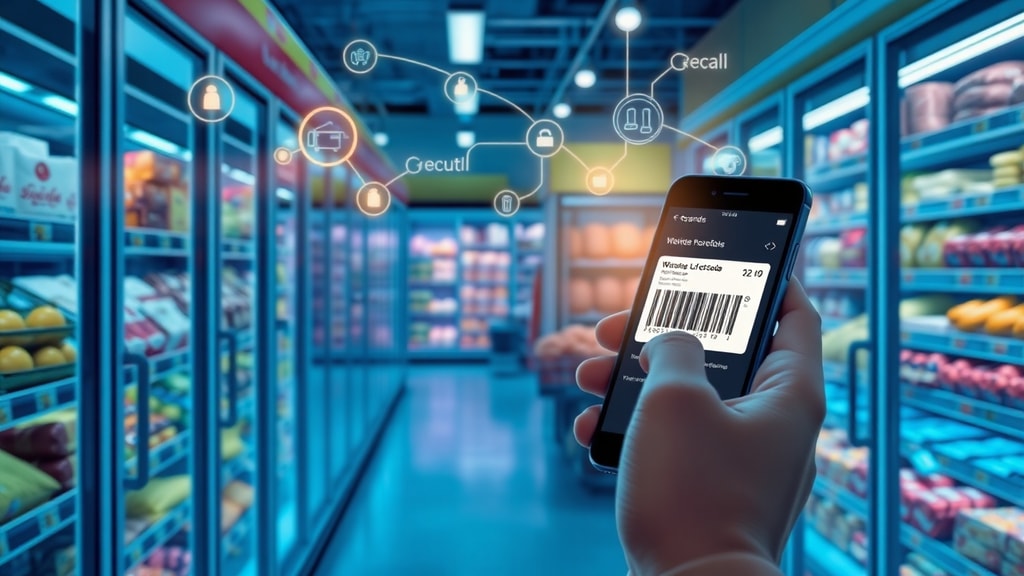
My prediction: over the next few years, the “gold standard” will shift from simple lot codes to end-to-end digital traceability—linking ingredient lots, processing records, packaging runs, distribution shipments, and retail inventory scans. In parallel, consumer-facing recall communication will become more personalized and automated, potentially through app-based lot scanning and pharmacy-style digital alerts.
At the same time, regulators will likely tighten expectations around allergen controls and temperature-control verification, especially for ready-to-eat frozen products. The cold chain will not be judged only by average performance but by proof of resilience—how systems behave during edge cases, not just during ideal conditions.
The trend journalist in me sees a clear trajectory: recalls will become more frequent in announcements, but potentially less frequent in harm—if detection accelerates faster than distribution delays. The public’s job will be to respond to recalls promptly; industry’s job will be to prevent them from happening in the first place; and regulators’ job will be to ensure that the speed of accountability matches the speed of modern logistics.
In the frozen-food era, safety is no longer a single stage—it is the entire lifecycle. Frozen food recall headlines are a sign that the lifecycle is being measured with greater intensity. The question now is whether that measurement translates into fewer incidents that reach homes.