IndyCar’s New Era: Why the Series Is Accelerating Global Attention in 2026
Published: August 9, 2026
1) Introduction: What IndyCar Really Is
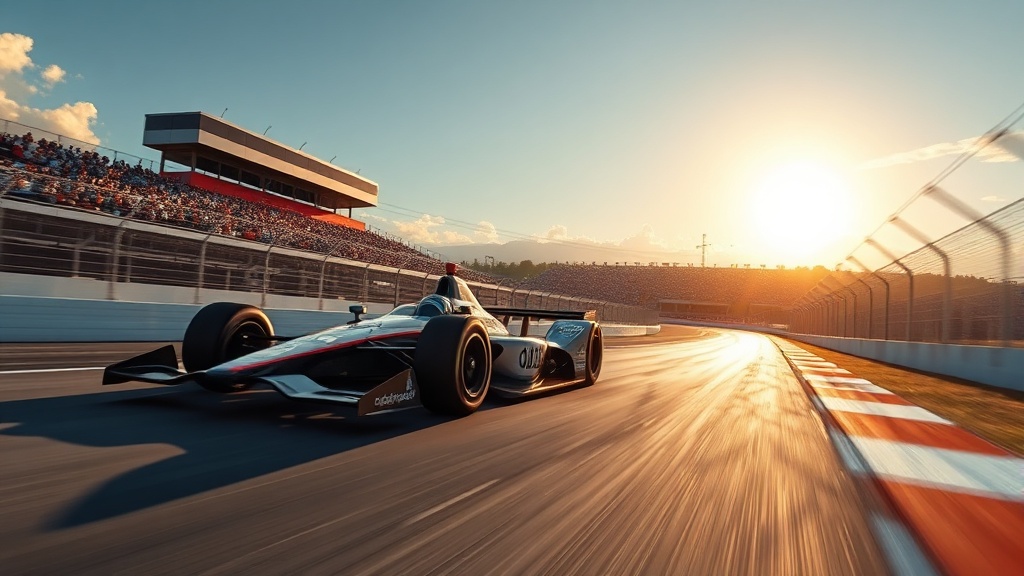
IndyCar (formally known as the NTT IndyCar Series) is the United States’ top-tier open-wheel racing championship, governed primarily by IndyCar. It is distinct in motorsport because it blends purpose-built aerodynamic racing cars, a mix of oval, road course, and street-track disciplines, and a championship structure designed to reward both raw speed and strategic consistency. Unlike one-off exhibition races, IndyCar runs a season-length campaign where cumulative points determine the champion, making every qualifying session and pit decision consequential across months of competition.
The cars themselves are a signature part of IndyCar’s identity. IndyCar vehicles are engineered for high-downforce performance and intense wheel-to-wheel racing, with rules that aim to balance safety, competitiveness, and spectacle. The series is also known for its distinctive racing calendar: **Indianapolis Motor Speedway’s oval traditions**, **world-class road courses**, and **tight downtown street circuits** create a format where drivers must continuously adapt braking zones, throttle discipline, tire management, and car setup. This versatility is one reason IndyCar attracts both hardcore fans and newcomers; the racing “language” changes track by track.
Equally important is IndyCar’s status as a professional ecosystem. Teams operate like high-performance technology organizations—integrating aerodynamics research, data analytics, simulation, and rapid trackside engineering. Drivers, meanwhile, come from multiple racing pathways (including junior open-wheel categories and international circuits), and IndyCar functions as a global talent magnet even while remaining deeply rooted in American motorsport culture.
In short: **IndyCar is not just a race series—it is a competitive, data-driven motorsport league built on open-wheel speed, strategic parity, and multi-discipline racing that tests drivers and engineers in radically different environments.**
2) The Catalyst: Why IndyCar Is Trending Right Now
IndyCar’s current surge in attention is not driven by a single storyline; it’s the result of multiple converging triggers that have recently intensified public interest. First, the sport has benefited from **heightened media visibility and streaming accessibility**, allowing fans outside traditional cable ecosystems to follow qualifying, practice, and race weekends with fewer barriers.
Second, IndyCar is benefiting from a broader global motorsport pattern: audiences are looking for racing that combines **credible competitive uncertainty** with **clear, frequent action**. In the past, open-wheel racing sometimes felt “too predictable” to new viewers because cars could separate too much. In the last stretch of seasons leading into 2026, however, the series has increasingly delivered the kind of close racing—overtakes, late-race strategy swings, and variable outcomes—that trains viewers to watch from race start rather than only for highlights.
Third, IndyCar’s visibility has been boosted by sustained manufacturer and sponsor interest. Racing is increasingly judged as a content platform: brands want measurable engagement, and IndyCar’s fan base—concentrated, passionate, and digitally active—offers an attractive return on investment. When the right combination of sponsorship activation and compelling on-track narratives arrives, it becomes a feed-worthy product across social media.
Finally, the series has been repeatedly “pulled” into relevance by major calendar moments—especially races that function as both sporting contests and cultural events. When a championship fight is sharp, when an underdog becomes credible, or when a standout drive collides with high-stakes strategy, the resulting headlines create a ripple effect.
Put simply: **IndyCar is trending now because it has aligned distribution, competitive excitement, and commercial storytelling at the exact time global audiences are consuming more live sports and racing content on digital platforms.**
3) Deep Dive: Context, History, and Second-Order Implications
To understand where IndyCar’s momentum comes from, it helps to review what the series has historically meant. Open-wheel racing in North America has long been shaped by the tension between tradition and modernization. IndyCar’s modern era has had to manage a delicate balance: retain the heritage of iconic American venues while ensuring the technology, cost structure, and race format remain attractive to teams and sponsors.
Historically, IndyCar has faced the recurring question that every expensive motorsport must answer: **How do you keep the racing competitive without allowing costs to balloon?** When spending rises without corresponding on-track parity, racing can drift into “team dominance,” which undermines broader audience engagement. Conversely, if rules are too restrictive, teams can’t innovate; innovation is part of the series’ brand.
Over time, IndyCar has refined its approach, using regulations to shape performance while leaving enough room for engineers to compete. The goal is not sameness—it is **controllable variability**. That is why the series’ multi-surface schedule matters. Oval racing tests momentum, aero balance, and tire evolution in sustained high-speed conditions. Road and street races demand traction under braking, steering precision, and the ability to survive traffic and strategy variance in compact racing lines. This structure naturally creates openings for different teams and driver styles, which can prevent the championship from becoming monotonous.
Second-order implications—those effects that don’t hit immediately but reshape the future—are where IndyCar’s current trend becomes truly meaningful.
1) A content-first motorsport strategy is emerging
Racing is inherently visual, but modern audience behavior rewards frequent engagement. IndyCar’s improved visibility isn’t only about more viewers; it’s about **more touchpoints**. When fans can follow practice clips, tactical breakdowns, and driver stories across platforms, the sport becomes a living conversation rather than a quarterly event.
2) The “skill product” is increasingly legible to new audiences
IndyCar is uniquely educational as a spectator sport. Because the series spans ovals, road courses, and streets, fans can learn how setup choices affect braking stability, tire degradation, and overtaking windows. That means IndyCar can gradually convert casual viewers into knowledgeable fans—an outcome that strengthens long-term loyalty.
3) Teams are evolving into data and engineering institutions
IndyCar teams are investing in simulation, reliability engineering, and telemetry interpretation. The racing action is the headline, but the operational maturity is the engine. In the long run, this makes IndyCar more attractive to sponsors that want innovation narratives grounded in real-world performance.
4) The talent pipeline is becoming more globally connected
As IndyCar improves its international visibility, it becomes a more attractive destination for drivers seeking high-profile, skill-heavy racing with global recognition. That accelerates the competitive baseline and encourages cross-pollination of engineering cultures.
From a trend-journalist perspective, the most important point is this: **IndyCar’s traction is not merely popularity—it is the development of a sustainable attention system.** That system involves rules, scheduling, media distribution, and commercial messaging all reinforcing each other.
4) Future Outlook: Bob’s Forward-Looking Prediction
Here is Bob’s prediction, grounded in how sports ecosystems tend to mature: **IndyCar is likely to shift from being “America’s best-kept open-wheel secret” to a consistently global motorsport brand—provided the series preserves close racing and keeps lowering the friction of access for new audiences.**
The most likely trajectory over the next few seasons is incremental growth rather than sudden dominance: more international viewers, more sponsor storytelling built around engineering innovation, and a stronger pipeline of driver attention tied to recognizable personalities.
However, Bob also sees a potential cliff. If costs rise faster than audience value—or if racing becomes too processional—attention gains can stall. The sport’s future therefore depends on maintaining competitive uncertainty: the very ingredient that makes fans feel that they might witness history every weekend.
If IndyCar keeps delivering on that promise, the series will not just remain a championship; it will become a recurring global appointment—where engineering meets drama, and where the next overtake could plausibly decide not only a race, but the season’s narrative.
That is why IndyCar is trending now: it is evolving into something bigger than its track boundaries.