Jack Johnson: The Boxer Who Redefined Celebrity, Race, and the Global Sports Stage
Published: June 21, 2026
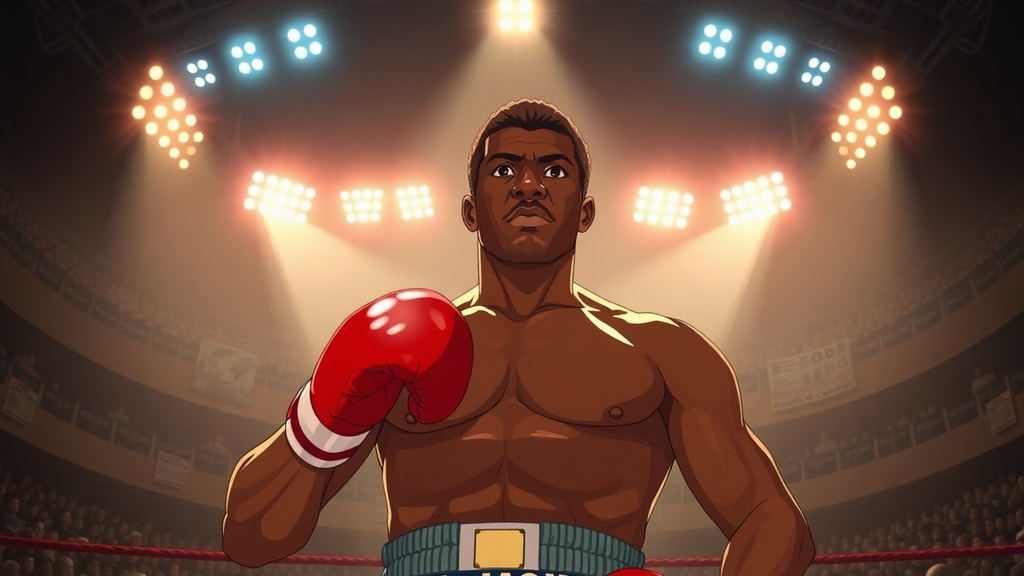
Introduction: Who Jack Johnson Was—and Why He Matters
Jack Johnson (born John Arthur Johnson, 1878–1946) was an American professional boxer who became the first Black heavyweight champion of the world, holding the title from 1908 to 1915. He did not simply win fights; he reshaped what heavyweight boxing could represent in the public imagination. Johnson’s fighting style—often described as confident, tactical, and unhurried—paired with an unusually visible personal life that made him a global celebrity long before modern media ecosystems existed.
To understand his importance, you have to separate three overlapping identities.
**First: the athlete.** Johnson rose from modest circumstances and turned boxing into a discipline where timing, footwork, and psychological pressure mattered as much as brute force. His rivalry with white contenders in the early 1900s made every title bout a high-stakes referendum on power. His most famous era includes his 1908 championship win, his highly publicized defenses, and the broader run of events that transformed heavyweight boxing into an international spectacle.
**Second: the symbol.** Because Johnson was Black and succeeded at a level reserved for white champions within the Jim Crow United States, his reign became entangled with race politics. Supporters saw not only athletic excellence but proof that dignity and excellence could not be contained by segregationist ideology. Opponents and institutions often treated him less like a sportsman and more like a threat to racial hierarchy.
**Third: the media figure.** Johnson’s era featured newspapers, early film, traveling exhibitions, and growing mass attention. Photographs and press narratives turned him into a character: sometimes heroic in the Black press and among international spectators, sometimes demonized in segments of mainstream coverage. In practice, his celebrity functioned like a primitive version of modern branding—except the stakes were existential.
That triangular identity—fighter, symbol, media figure—explains why Jack Johnson remains relevant. His life sits at the intersection of sport, law, technology of publicity, and racial power, and each of those domains continues to reverberate in today’s cultural conversations.
The Catalyst: Why Jack Johnson Is Trending Right Now
Jack Johnson’s name resurfaces in the news and online discourse whenever four contemporary forces converge:
1. **Renewed attention to sports figures as political actors.** In recent years, audiences have increasingly questioned how athletic excellence is celebrated—or punished—depending on race, class, and political framing.
2. **A spike in historical reappraisals fueled by documentaries, archival releases, and streaming platforms.** Period biographies and newly digitized archives have made older episodes of Johnson-era history easier to verify, share, and debate.
3. **Ongoing discussion about racialized media narratives.** Johnson is frequently cited as an early example of how mainstream coverage can invent stereotypes, amplify scandal, and treat certain champions as “exceptions” or “contaminants” rather than equals.
4. **International comparison culture.** As global audiences watch sports across borders, they increasingly connect Johnson’s global fame to the present-day export of athletes—then ask why the historical “global stage” sometimes welcomed talent while still rejecting full humanity.
In short: Johnson is trending right now because the questions his life posed—who gets to be a champion, who gets to be human in public, and who controls the story—remain unresolved. Modern audiences recognize the pattern, and they’re looking for historical origin points. Johnson is one of those origin points.
Deep Dive: Context, History, and Second-Order Implications
Historical background: from fighting to governance
Johnson won the heavyweight crown at a time when racial segregation was not merely social custom; it was a legal infrastructure. Jim Crow enforced separate facilities, restricted mobility, and normalized violence. In that environment, the idea of a Black man holding the most visible prize in a national sport was destabilizing to white institutions.
What’s crucial is that the conflict around Johnson was not only about boxing outcomes. The public struggle involved courts, policing, and social control mechanisms that could outlast any one fight. His celebrity created a dilemma for institutions: he could not be ignored because his athletic results were undeniable, yet acknowledging him fully threatened the racial order that depended on symbolic dominance.
In other words, boxing acted as the stage, but the antagonists often operated through non-boxing levers—legal pressure, media framing, and social intimidation.
The media machine: how narratives become policy
Johnson’s story illustrates a recurring pattern in modern times: when a public figure challenges existing hierarchies, narratives become a kind of governance. Newspapers and commentators did not merely report events; they interpreted them through racialized assumptions.
That matters because media framing can shape the practical options available to an individual. A champion portrayed as scandalous or “un-American,” for example, may encounter barriers to scheduling, licensing, travel, and public acceptance. In Johnson’s era, these barriers did not need to be overtly labeled as racial. They could be administered through “neutral” processes that were anything but neutral.
This is the second-order implication: **a society can turn cultural narratives into real constraints.** Sports governance is not only about athletic rules; it is also about who is allowed to exist comfortably inside the public story.
International dimensions: global fame, uneven freedom
Johnson’s reach extended beyond the United States. His fame traveled, and in certain places abroad, he encountered a different social climate than the one he faced at home. That contrast is central to understanding his legacy: it reveals how freedom can be geographically conditional.
If you want a single analytical takeaway, it’s this: **global celebrity does not automatically equal global equality.** Johnson’s experience demonstrates that admiration can coexist with exclusion—sometimes in the same breath, sometimes in different rooms.
Masculinity, performance, and the politics of visibility
Another under-discussed facet of Johnson’s historical impact is the politics of visibility. He embodied a particular kind of masculinity that unsettled stereotypes. His presence—how he moved, who he was seen with, how he conducted himself—was interpreted by adversaries as defiant, while supporters interpreted it as self-possession.
That tension is a precursor to modern debates about athletes’ “marketability” and “conduct.” Today, media outlets still police who gets to be expressive, romantic, rebellious, or simply themselves. Johnson’s era shows that the policing has always existed; it just used different tools.
Second-order implications for modern sport
Johnson’s legacy offers at least three modern lessons:
1. **Champions can become battlegrounds.** Even when the fight ends, the social debate continues. Organizations and governments may treat athletic figures as symbolic threats.
2. **Institutional neutrality is often a myth.** Rules and legal processes can be applied unevenly, particularly when race and power are at stake.
3. **Cultural rehabilitation is never complete.** Public memory swings between reverence and condemnation, depending on who gets to tell the story and what present-day needs the story serves.
These are not merely historical observations. They describe dynamics visible today whenever audiences confront the intersection of race, media, and sports governance.
Future Outlook: Bob’s Prediction on How Johnson Will Be Used Next
Here is my forward-looking prediction: **Jack Johnson will increasingly be treated not just as a “sports pioneer,” but as a case study in media power and institutional control—an intellectual reference point in debates about athlete autonomy, racialized storytelling, and the governance of public figures.**
As more archival material becomes accessible and as new generations demand evidence over inherited myth, Johnson’s story will likely be revisited with two goals in mind: to correct distortions and to extract frameworks. Expect historians, journalists, and even sports administrators to reference him when discussing questions such as:
Johnson’s reign ended long ago, but the structure of the problem—the linkage between visibility and power—has only changed its costume. The next wave of attention will not be about nostalgia. It will be about understanding how modern institutions inherited old instincts, and how champions are still asked to prove not only talent, but permission.
Jack Johnson remains trending because the world still hasn’t finished deciding what a champion is allowed to be.