Jonathan Isaac: The NBA’s Privacy-Forward, Value-Driven Star and What His Next Chapter Signals
Published: June 27, 2026
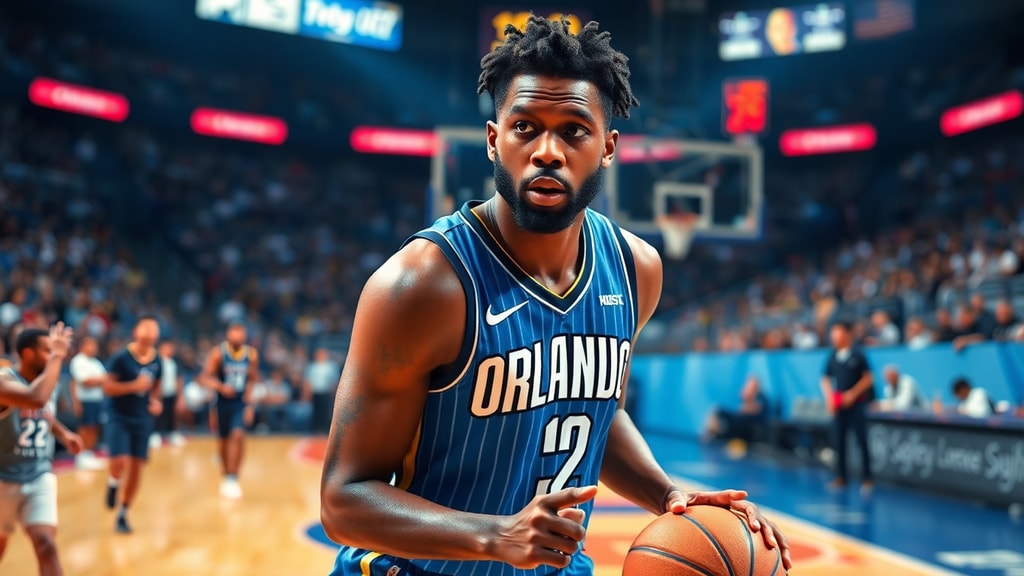
1) Introduction: Who Jonathan Isaac Is—On the Court, in the Public Eye, and in the League’s Ongoing Argument About Values
Jonathan Isaac is an American professional basketball player best known for his tenure with the Orlando Magic, where he became one of the league’s most distinctive defensive specialists and rim-protectors. Isaac’s identity in the NBA is shaped by three interlocking dimensions: his basketball profile, his injury-affected trajectory, and his uncommon public posture on personal beliefs.
On the court, Isaac has been valued for length, timing, and defensive fundamentals—traits that matter most in playoff basketball when possessions tighten and teams try to create advantage through stops rather than highlight plays. He has repeatedly shown the ability to guard multiple positions, deter drives, and contest shots without always relying on reckless fouls. The modern NBA increasingly rewards switches and defensive versatility, and Isaac’s skill set has fit that system—especially during seasons when the Magic leaned into defense and structure.
Off the court, however, Isaac is more than a set of statistics. He is known for being careful about how he represents himself in public debates and for the way he has navigated high-visibility social issues tied to professional sport. In an industry where athletes often become instant broadcasters of opinions, Isaac has tended to draw attention for *not* behaving like a perpetual performer. His public communications have been comparatively measured, and his choices have sometimes placed him at the center of broader cultural conversations, particularly those related to institutional policy and the expectations placed on prominent athletes.
That combination—an elite defensive reputation plus a public persona that refuses to be a simple marketing character—has made Isaac a compelling subject for trend-journalism. He represents both the romantic ideal of a “team-first” defender and the modern reality that athletes are also cultural actors, whether they want that label or not.
2) The Catalyst: Why Isaac Is Trending Right Now
Isaac’s name tends to resurface when multiple forces converge: roster management stakes, ongoing league debates about player values and institutional rules, and the simple fact that fans track any meaningful update to a player’s health and availability. In the current cycle of NBA attention, Isaac is trending because the league is again in a moment where teams are hunting for reliable defensive anchors—and because Isaac’s history of elite defense, combined with his understandable interruptions, creates a persistent “what could have been” narrative.
Additionally, Isaac’s visibility is amplified whenever he returns to active participation (practice footage, roster updates, media mentions, or gameplay evidence), because each appearance functions like a data point in the same long-running question: *Can Isaac reclaim the level of impact that made him one of the league’s most intriguing defensive prospects?*
In other words, the immediate trigger is not a single scandal or viral clip; it is the recurring combination of (1) renewed competitive pressure in the NBA, (2) an offseason-to-regular-season media cycle that spotlights player readiness, and (3) Isaac’s unique mix of defensive credibility and value-driven public identity that keeps him relevant beyond one box-score night.
3) Deep Dive: Historical Context and Second-Order Implications
Isaac’s Career Arc: From Prospect Promise to Reality-Check
When Isaac entered the NBA, the early story was clear: he had the physical tools and defensive instincts to become a high-impact wing defender in a league increasingly dependent on perimeter defense. The Magic’s identity during his best stretches leaned into what coaches always want—repeatable stops, positional discipline, and the ability to slow ball pressure.
But Isaac’s career also illustrates a central truth about professional sports: durability is its own form of performance. Injuries did not simply remove him from games; they changed the cadence of his development, reduced live repetitions, and complicated how teams evaluate him. Basketball is a sport of rhythm—timing contests, reading drives, communicating on rotations. When time away becomes prolonged, returning isn’t only about physical clearance; it is also about restoring the micro-decisions that elite defenders learn through repetition.
The Modern NBA’s Defensive Economics
The league has shifted further toward two realities: (a) teams are optimizing for spacing and shot creation, and (b) defense is now measured not just by “effort” but by impact metrics—how well a defender reduces opponent efficiency, how consistently they prevent clean looks, and how reliably they perform in switch-heavy lineups.
Isaac’s value, historically, is that he fits the defensive economics. He is the type of player teams covet because he can change opponents’ shot selection and limit the “easy layer” of scoring. Even when offensively constrained, elite defense can provide a stable foundation—especially for teams seeking a playoff identity.
Second-Order Implication: Isaac as a Case Study in Athlete Communication
Isaac’s public posture matters because it forces a question the NBA—and sports media generally—keep wrestling with: *Do athletes exist to be interpretable as mascots for every institution, or can they maintain agency over what they say and when they say it?*
Second-order implications appear in how organizations communicate with players and fans. When a high-profile athlete is seen as value-driven but not constantly reactive, it changes the media strategy around them. Broadcasters may frame him less as a constant talking point and more as a performance subject. Teams may also treat such players as “culture carriers” in a different sense—not merely locker-room leaders, but individuals whose conduct signals something about team norms.
For fans, Isaac can also become a symbolic figure in the debate over whether personal convictions should be treated as public property. That debate is unlikely to disappear. It echoes through league policy negotiations, broadcast narratives, and social-media comment cycles. Isaac’s visibility, even when he is not dominating highlight reels, becomes a reminder that sports are never purely sports.
The Injury Narrative as a Trend Engine
There is a subtle trend mechanism at work: modern fandom has become addicted to comeback arcs, not only because they are inspiring but because they provide a structured story in a data-rich environment. Isaac’s injury history supplies that narrative engine. Each update generates renewed speculation—about readiness, role fit, and whether the athlete can return to the exact defensive level that made him so valuable.
That speculation influences more than sentiment. It affects how teams prepare, how fans evaluate contracts and risk tolerance, and how analysts calibrate their models. In that sense, Isaac’s “case” becomes a living lab for the league’s understanding of injury recovery, role reintegration, and defensive timing.
4) Future Outlook: Bob’s Prediction for Isaac and the League’s Next Cultural Contract
Looking ahead, the most important forecast is not whether Jonathan Isaac will return to his absolute peak in every measurable way. In modern NBA time, peaks are rare and fleeting; what matters is whether an athlete can regain *reliable impact* within a defined role.
My prediction: Isaac’s next chapter will be shaped less by the question “Will he be the same player?” and more by “Will he become a dependable defensive engine again—enough to matter in high-leverage minutes?” If he returns to health and regains his defensive rhythm, his value will likely express itself through consistency: rotation credibility, match-up-specific starts, and late-game assignments where coaches trust his reads.
Culturally, I also expect Isaac to remain a magnet for debates about athlete agency—especially as the league faces pressure to standardize communication while players resist being reduced to platforms. The likely outcome is a more fragmented public sphere: some athletes will embrace maximal visibility, while figures like Isaac will continue to signal that performance and personal boundaries can coexist.
In short, Jonathan Isaac is trending because he sits at a crossroads: the NBA’s defensive needs, the reality of injury-and-recovery narratives, and the ongoing renegotiation of how athletes should behave in public life. If he reasserts his defensive reliability, he will not only help teams; he will also redefine the kind of star the league can still accommodate—one who influences by presence, not by constant noise.