Lizzo and the New Mainstream: How a Pop Superstar Turned Confidence into a Cultural Force
Published: June 29, 2026
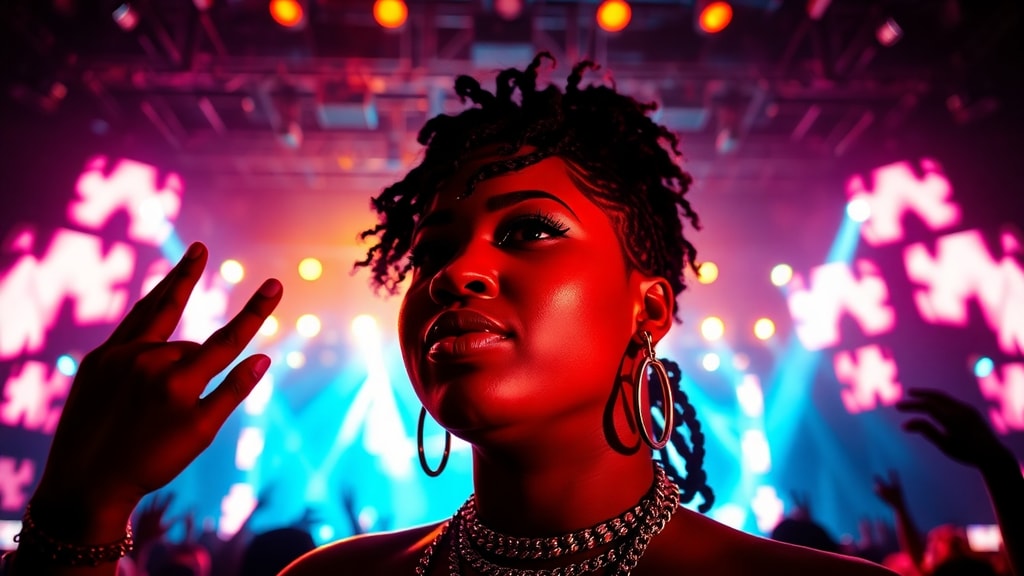
Introduction: Who Lizzo Is—and Why Her Influence Matters
Lizzo is a global pop and hip-hop performer—Melissa Viviane Jefferson—who rose from local stages to international prominence through a combination of musical craft, flamboyant charisma, and a message that landed with unusual clarity: self-confidence is not a personality flaw, it is a form of agency. She is known for her high-energy tracks, her wide vocal range, her unapologetic stage presence, and her ability to translate personal philosophy into mainstream entertainment.
Born in Detroit and raised in Houston, Lizzo’s path followed the classic arcs of modern artistry—training, persistence, and eventual discovery—but with a notable twist. Many mainstream pop narratives reward artists who either conform to conventional aesthetics or keep their identity messaging safely abstract. Lizzo, by contrast, put her body and her worldview at the center of her brand—not as a gimmick, but as the engine of her creative legitimacy. Over time, she became an emblem for millions who felt excluded from “acceptable” standards of beauty and belonging.
In practical terms, Lizzo’s influence operates at multiple levels:
The key point is that Lizzo is not simply “popular.” She is a cultural participant whose career has helped shift what audiences treat as normal, desirable, and worthy of celebration.
The Catalyst: Why Lizzo Is Trending Right Now
Lizzo is trending at this moment because the public conversation around her—like it often does with high-profile figures—has intensified across several converging arenas: ongoing pop culture discourse, platform-driven visibility, and renewed attention to how mainstream media handles identity, empowerment, and accountability.
In recent weeks and months, Lizzo-related coverage has accelerated due to a typical but powerful mechanism of the contemporary media ecosystem: **a cycle of releases, interviews, social-media commentary, and reporting that re-contextualizes an artist within broader societal debates.** Even when her core musical output is not the only driver, the surrounding narrative—her public stance on body positivity and self-acceptance, her relationship with critics and supporters, and the larger cultural moment around representation—keeps pulling her back into the news cycle.
More importantly, Lizzo trends because audiences are actively asking a complicated question in real time: **What does “confidence” mean, and who has the right to define it?** That question has become sharper globally amid shifting health narratives, changing norms in fashion and media, and renewed scrutiny of celebrity influence.
In other words, Lizzo is trending now not only because of the spotlight on her personally, but because her career has become a reference point in a much bigger argument about modern identity politics—one that is happening simultaneously on streaming platforms, news sites, and everyday social feeds.
Deep Dive: Analytical Context, Historical Background, and Second-Order Implications
To understand why Lizzo matters, it helps to locate her within a longer arc of mainstream culture.
1) The historical tension: visibility vs. commodification
Body positivity movements have existed for decades, but the mainstream adoption of “empowerment” has often arrived with tension. Once a message becomes profitable, it risks being flattened into a slogan—emptied of its original political edge. Lizzo’s career illustrates both sides of that dynamic.
On one hand, she has used mainstream music to place larger-bodied visibility in the center of pop culture rather than its margins. That is not trivial; it changes what young audiences see as attainable.
On the other hand, commercialization can produce a second-order effect: empowerment can be reframed as a personal branding strategy rather than a structural critique. When confidence becomes content, the deeper questions—about healthcare access, discrimination, and the economics of representation—can get sidelined.
Lizzo sits at that fault line. Her success demonstrates that the market can expand; her public debates show that cultural expansion doesn’t automatically solve cultural power imbalances.
2) Pop music as a vehicle for emotional policy
Lizzo’s songs are often described in simple terms—catchy, bold, celebratory—but her influence is more subtle than that. Pop music is not just entertainment; it is a training ground for emotions. When a mainstream artist repeatedly pairs self-acceptance with pleasure, spectacle, and communal dance, she offers audiences a new emotional script.
This is the second-order implication: **she doesn’t only sing about confidence—she normalizes the feeling of confidence in public.** In societies where people are trained to be self-conscious about their bodies, backgrounds, or identities, that shift is psychologically consequential.
3) The media logic of the internet: audiences want both authenticity and perfection
Lizzo’s public visibility also highlights a modern contradiction. Social media encourages intimacy and “authenticity,” yet the same platforms intensify judgment and reward outrage. A celebrity becomes a living battleground for competing audience demands:
This is where trend cycles begin to resemble cultural trials. When audiences are polarized, every new statement becomes consequential. Lizzo’s identity-driven message makes her especially vulnerable to both pedestal worship and adversarial commentary.
4) Industry pressure: the mainstream must adapt or lose relevance
The deeper historical background includes the transformation of the entertainment industry itself. Over the last decade, streaming platforms have rewarded artists who can sustain attention through personality, visuals, and narrative—rather than only through radio-friendly conformity.
Lizzo’s mainstream breakthrough therefore reflects a structural shift:
Her continued relevance becomes a signal to industry stakeholders: if you want the future audience, you must accommodate broader definitions of beauty, confidence, and performance.
Future Outlook: Bob’s Prediction on Lizzo’s Next Chapter
As a trend journalist, I treat moments like this as indicators—not just of one celebrity’s career, but of the cultural weather.
Here is my forward-looking prediction: **Lizzo is likely to evolve from being primarily “an empowerment star” into being a durable architect of mainstream emotional norms**—the kind of figure who shapes how pop culture talks about body confidence, health language, and self-worth.
In the near term, expect her influence to continue flowing through three channels:
1. **Music and performance aesthetics** that keep broad audiences associating confidence with joy rather than irony.
2. **Public discourse participation**—not merely through songs, but through statements, projects, and collaborations that force the industry to reckon with representation beyond token gestures.
3. **Business and brand expansion** that turns empowerment into infrastructure: platforms, partnerships, and creative spaces that can outlast any single album cycle.
The risk, of course, is that mainstream culture will try to reduce complex empowerment into a consumable slogan. But Lizzo’s history suggests she is resilient and strategic, and that she understands the difference between celebration and dilution.
If she keeps leaning into that distinction—between empowerment as performance and empowerment as real cultural change—then her next chapter will likely matter not just for charts, but for how global audiences learn to speak about the bodies and identities they previously kept hidden.
That is why Lizzo continues to trend: she is not just an artist in the news—she is an argument that refuses to disappear.