MaxPreps: How a High-School Sports Data Network Became the Internet’s Default Playbook
Published: August 10, 2026
1) Introduction
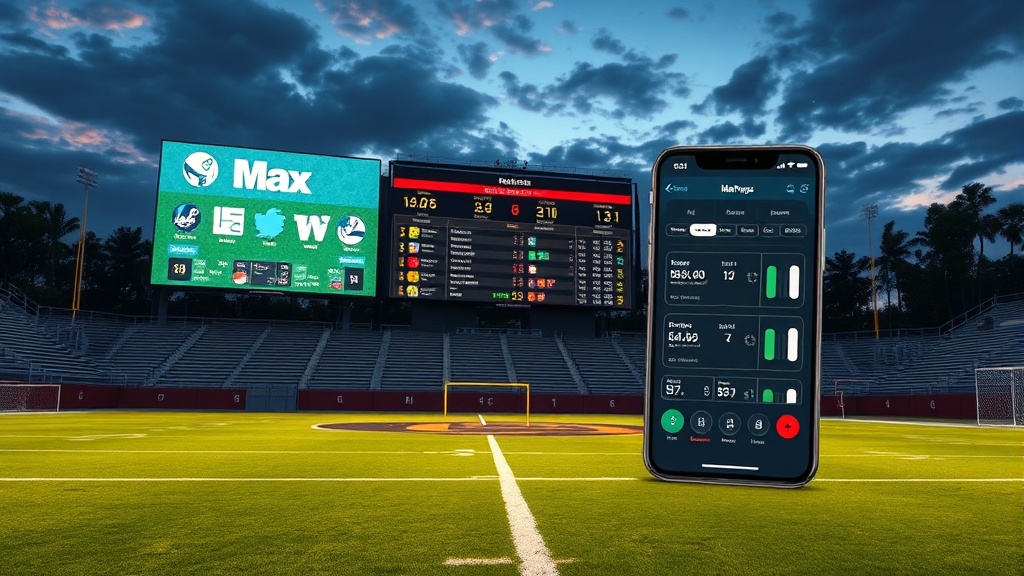
MaxPreps is a widely used digital platform for high-school sports coverage in the United States, combining sports results, schedules, statistics, team pages, player information, and news-like game reporting into a single online ecosystem. In practice, it functions as a kind of “record system” and “visibility layer” for teams that traditionally existed outside the spotlight of national professional and college sports media.
At a functional level, MaxPreps aggregates game results—scores, dates, locations, and opponents—then organizes them by sport, season, team, and geography. It also supports season-long statistical tracking, team rankings, and searchable information that parents, athletes, fans, and local communities rely on to verify performance and follow matchups. Many schools and coaches contribute updates, either directly or through workflows supported by the platform, while MaxPreps staff and systems help standardize how information is presented.
MaxPreps is not merely a scoreboard. It is the digital infrastructure behind the modern high-school sports routine: checking next week’s slate, reviewing standings, comparing player performances, verifying eligibility-related narratives that often hinge on participation and game logs, and sharing highlight moments that are increasingly circulated online.
To describe MaxPreps in precise terms, it sits at the intersection of three worlds:
In short: MaxPreps has evolved from a results repository into a continuously updated platform that helps define what “known” means in high-school sports—what games are remembered, what achievements are indexed, and what performance becomes visible beyond the local gymnasium or field.
2) The Catalyst
MaxPreps is trending right now for a straightforward reason: high-school sports are experiencing an acceleration in digital attention, fueled by social media highlights, increased reliance on online schedules and standings, and a heightened interest in recruiting transparency.
Recent triggers in the news cycle and on the broader internet include:
The combination of viral moment + verification need creates a predictable loop: social posts elevate interest, and MaxPreps answers the verification and follow-through question—“What happened, when, and how did the team/athlete perform over the season?”
3) Deep Dive
Historical context: from community bulletin boards to searchable performance databases
High-school sports historically lived on analog timelines: schedules in school offices, results shared in newspapers, and statistics tracked privately by coaches. MaxPreps enters this history as part of the long transition to digital record-keeping and online fan access. The platform’s value is that it standardized scattered information into an interface that ordinary users could navigate without knowing the internal mechanics of local athletic departments.
What changed over time is not only technology, but expectations. A modern sports audience expects:
MaxPreps aligns with those expectations by turning high-school sports into data that can be searched, filtered, and revisited.
Analytical context: why MaxPreps matters even beyond sports
Second-order implications appear when a platform becomes the “source of truth” for structured competitive events. MaxPreps doesn’t just report outcomes; it shapes how people interpret them.
Consider these mechanisms:
1. **Narrative formation from structured data**
When standings, rankings, and statistical pages are easy to access, audiences form narratives faster. A team’s win streak is no longer anecdotal; it is charted. A player’s production is no longer a highlight-only claim; it becomes a season record.
2. **Behavioral feedback loops for schools and athletes**
If families, recruiters, and fans can find performance data quickly, coaches and athletic directors may increase the emphasis on meticulous reporting and game-by-game consistency. That can affect training culture—because performance visibility becomes a recognized outcome.
3. **Recruiting and opportunity transparency**
Recruiting networks thrive on evidence. MaxPreps-style indexing provides a common reference point. Even when recruiting decisions remain multifactorial, standardized data reduces friction for scouts, analysts, and decision-makers.
4. **The emergence of “local metrics”**
In professional and college sports, metrics and analytics are deeply institutionalized. MaxPreps introduces a diluted but meaningful version of that world to high school: not only what happened, but what patterns suggest.
Governance and risk: the thin line between information and influence
Any platform that aggregates real-time competitive results also faces credibility and governance questions. If people treat the platform as authoritative, errors—missing updates, inconsistent score reporting, or delayed corrections—can ripple outward. Additionally, platforms can inadvertently influence competitive ecosystems by magnifying attention toward already prominent teams while making lesser-publicized programs harder to discover.
That creates a journalistic and ethical challenge: platforms must balance speed with accuracy, and visibility with fairness. The most sustainable path is often investment in data validation, clear correction pathways, and transparent methods for rankings and presentation.
For MaxPreps, the opportunity is to become more than a conduit of numbers—by acting as an integrity layer for high-school sports data in a landscape where misinformation spreads easily.
Media and product strategy: why users keep coming back
MaxPreps benefits from a durable product insight: fans don’t just want one headline; they want continuity. Sports seasons are long arcs, and the platform is built to hold those arcs in one place.
This continuity is what makes it sticky:
In digital terms, MaxPreps is building a knowledge graph of local sports activity. Over time, this graph becomes harder to replace because it becomes integrated into how users think, search, and share.
4) Future Outlook
Bob’s prediction: MaxPreps will increasingly evolve from a static stats-and-scores site into an “athlete and team intelligence layer” that blends verified results with actionable insights—while facing rising scrutiny about data accuracy, fairness, and privacy.
In the near term, expect three likely shifts:
1. **More advanced analytics for users**: richer player trend views, matchup previews based on historical performance, and clearer season-context summaries.
2. **Deeper integration with social sharing**: tighter linking between viral content and verified game logs, reducing the distance between a highlight and its confirmed context.
3. **Stronger integrity tooling**: improved correction workflows, validation checks, and clearer attribution for how results and stats are supplied.
Longer term, the platform could become a primary gateway for high-school sports discovery—where ranking debates, recruiting narratives, and fan engagement all reference the same standardized data foundation.
If MaxPreps successfully strengthens accuracy and expands insight without sacrificing trust, it will not just stay relevant. It will become the default “public registry” for high-school sports performance—one that shapes not only how games are remembered, but how careers begin to be understood.