Mountain Dew “5-Cent Bundles”: The Small Price Signal That’s Becoming a Big Retail Story
Published: June 26, 2026
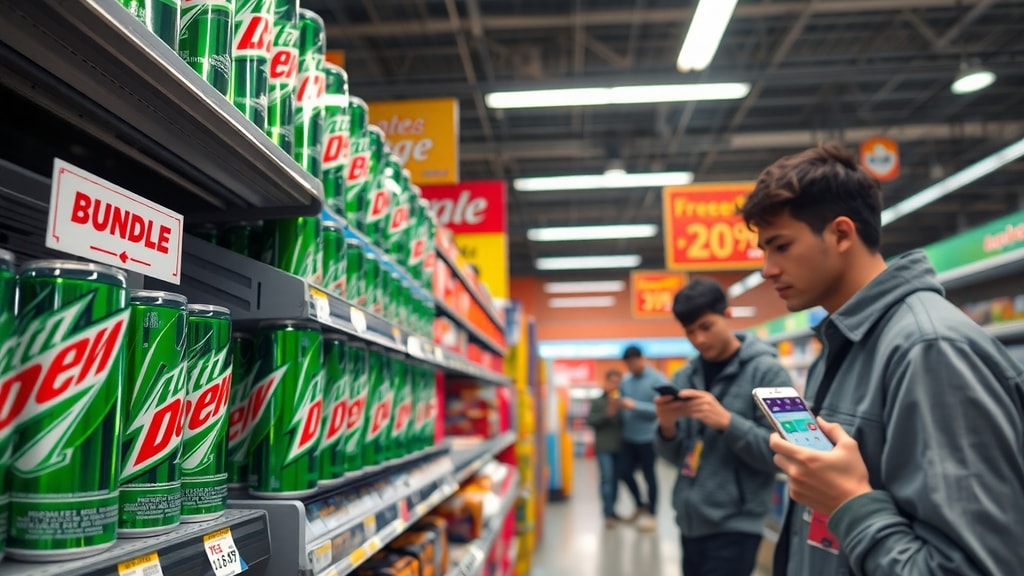
1) Introduction: What “Mountain Dew 5-Cent Bundles” Actually Are
“Mountain Dew 5-cent bundles” refers to a promotional retail deal where consumers receive Mountain Dew—typically in a multi-pack or bundled configuration—for a dramatically reduced effective price of “five cents,” often after the purchase of another item or through a limited-time offer structure (such as digital coupons, retailer-specific checkout discounts, or app-based redemption).
To be clear, the headline number (“5 cents”) is usually not the full sticker price paid per can in the normal sense. Instead, the “five cents” outcome is typically engineered by the offer mechanics: the consumer may buy a qualifying product (sometimes a separate snack or a minimum quantity) and then unlock a steep discount or a conditional rebate that effectively brings the beverage cost down to a five-cent figure.
Who is involved? Three major actors drive the phenomenon:
1. **The brand and bottling ecosystem**: Mountain Dew is distributed through a network of manufacturers, bottlers, and retail partners. Brand-level promotional calendars determine when and where deals appear, while bottlers manage supply timing and local availability.
2. **Retailers—especially convenience and grocery chains**: The bundles often surface in channels that compete on speed and proximity: convenience stores, big-box grocery, and mass merchandisers. Retailers benefit from basket-size increases even when beverage margin is compressed.
3. **Consumers using modern deal pathways**: Many shoppers now treat promotions as a kind of “second storefront,” where loyalty apps, QR coupons, receipt offers, and digital wallets translate discount mechanics into a measurable bargain.
In other words, a “Mountain Dew 5-cent bundle” is not just a cheap drink. It’s a coordinated retail tactic that turns the purchase moment into an optimization problem for the consumer and a traffic-and-basket strategy for the retailer.
2) The Catalyst: Why It’s Trending Right Now
This promo is trending now because consumer attention has shifted from “brand loyalty” to “value proof.” Multiple pressures have converged:
What turns these bundles from a routine marketing activity into a trend is the way the offer is experienced: shoppers can confirm it at checkout, then broadcast the result. In an era where consumers often distrust advertising claims, “receipt validation” becomes its own form of credibility.
3) Deep Dive: Context, History, and Second-Order Implications
From a distance, “5-cent bundles” look like a gimmick. Up close, they represent a familiar but evolving strategy—discounting with discipline.
A brief historical lens: beverage promos have always been math
Beverage promotions are not new. In the late 20th century, brands used coupons and multi-buy deals to influence stocking and trial. During the coupon boom, the “value proposition” was simple: reduce price at the right time to lift volume.
What has changed is **how the discount is engineered** and **how the consumer must participate**. Today, the “deal” is often conditional—tied to digital coupon downloads, minimum purchase thresholds, loyalty tiers, and sometimes multi-step redemption.
So the modern “5-cent bundle” is best understood as a **behavioral product**. It isn’t only trying to sell Mountain Dew; it is trying to move a shopper through a sequence:
1. Visit the retailer.
2. Engage with the app or coupon mechanism.
3. Add qualifying items to reach the threshold.
4. Complete checkout using the intended redemption path.
Second-order implication #1: margin compression may be strategic, not accidental
Extreme offers can worry analysts because they appear to erode profit. But for retailers, the economics often work through the “basket effect.” The consumer who seeks the deal frequently purchases additional items—snacks, cigarettes (in some jurisdictions), impulse groceries, or other beverages.
For the brand, the strategy can maintain shelf presence and keep the product top-of-mind during periods of promotional intensity. In beverage categories, brand equity is fragile: repeated low-price messaging can condition consumers to delay purchases until deals appear. Yet brands still choose these tactics because the alternative—losing velocity—can be worse.
Thus, the 5-cent framing is a calculated trade: accept a controlled squeeze on per-unit economics to purchase a larger share of occasions.
Second-order implication #2: the retailer becomes the “stage,” not the warehouse
Traditional marketing centers the brand message. But with bundles like this, the retailer’s interface becomes the primary communication channel: app screens, coupon tiles, checkout prompts, and receipt confirmations.
This matters because it shifts power. The shopper may not remember the brand’s tagline; they remember the store’s deal mechanics. Over time, that can increase retailer differentiation—even for commodities like soft drinks.
Second-order implication #3: data capture accelerates personalization
When a promotion requires app engagement, it creates a structured dataset: who redeemed, which device, what basket composition, and how quickly the consumer repeats. That enables better segmentation—value seekers, brand loyalists, weekend shoppers, and “one-time bargain hunters.”
Second-order here is subtle: Mountain Dew becomes not just a product, but a data point in a wider recommender system. Future promotions can be targeted more precisely, potentially making offers feel more relevant—and therefore more effective.
4) Future Outlook: Bob’s Prediction on Where This Goes Next
If “Mountain Dew 5-cent bundles” continue to spread, I predict we’ll see two related developments.
First, **promotions will become more interactive and less purely monetary**. Expect bundling mechanics to evolve into multi-step journeys—earn points, unlock discounts, redeem through receipts, and combine offers across categories. The goal will be to make deal-making feel like a game rather than a coupon.
Second, **value signaling will shift from general price cuts to precision loyalty**. Instead of blanket discounts for everyone, retailers and brands will increasingly concentrate extreme offers on identifiable segments: app-active customers, high-frequency basket builders, or lapsed buyers. The “five cents” headline will remain because it’s viral—but the actual delivery will be more selective.
In short, these bundles aren’t merely about selling soda cheaply. They’re about building the next retail relationship: one mediated by apps, receipts, and behavioral data. And as long as consumers chase verified bargains, Mountain Dew—or any brand willing to engineer the math—will remain in the center of that bargain-driven attention economy.