NYT Games: How The New York Times Turned Word Play Into a Global, Data-Driven Media Engine
Published: August 11, 2026
Introduction
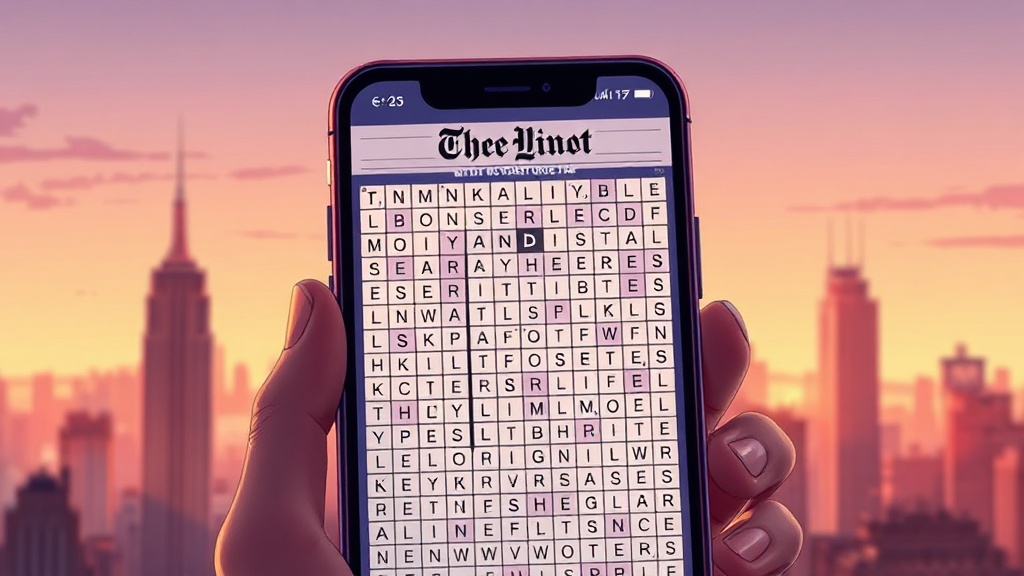
NYT Games is the brand umbrella under which The New York Times—one of the world’s most influential news organizations—publishes and operates a suite of digital puzzle and game experiences. In practice, “NYT Games” is best understood as a set of interactive products that include well-known daily titles such as the Crossword, the Mini Crossword, Wordle (through the NYT ecosystem), Spelling Bee, and a growing portfolio of word, logic, and casual games that are delivered primarily through the web and mobile apps.
Unlike a typical entertainment publisher that builds around fiction, NYT Games grows out of language: it is journalism-adjacent in form, but not in the usual sense of reporting. The product is a daily ritual. It sits at the intersection of media and games design, where editorial-quality craftsmanship meets interface simplicity, streak-based retention, and a careful balance between novelty and familiarity.
Just as important, NYT Games is also a customer relationship system. It helps The New York Times keep readers inside its ecosystem, convert casual visitors into subscribers, and sustain engagement between headlines. Even for people who do not read the news daily, puzzle completion can create a repeat visit schedule. In that way, NYT Games functions as a “time-on-platform” bridge: it converts attention into habit, and habit into loyalty.
If you want a single sentence definition: NYT Games is The New York Times’ consumer product layer for interactive word play—crafted to be shareable, addictive in a healthy, non-violent way, and monetizable through subscription.
The Catalyst
NYT Games is trending right now because the wider market has shifted in two directions simultaneously: (1) casual games have become the most efficient gateway into media subscriptions, and (2) the puzzle format—especially word games—has proven resilient to algorithmic competition and shifting attention spans.
Several triggers have fueled renewed momentum:
1) **The mainstreaming of puzzle culture.** Word games that were once niche are now common social currency. Players regularly post results, streaks, and “got it” moments across social platforms. That external sharing acts like free distribution.
2) **The “daily ritual” effect.** During recent years, consumer behavior has increasingly favored consistent, low-friction experiences that fit into commuting, breaks, and evenings. NYT-style puzzles do exactly that: they deliver a clear daily payoff.
3) **Platform consolidation under NYT.** When games live under a single trusted brand, users feel less friction. The New York Times has become a one-stop shop for both cultural credibility and entertainment utility.
4) **Subscription-driven adoption.** In many markets, users have learned to accept paywalls. Puzzle products help subscribers justify recurring cost because they feel personal, not just informational.
Put simply: when casual play became a premium habit and social sharing turned puzzles into public proof, NYT Games moved from “great product” to “cultural infrastructure.”
Deep Dive
To understand why NYT Games matters beyond entertainment, it helps to place it in a historical context.
From print craftsmanship to digital ritual
Crosswords and related word puzzles have a long lineage in print media—newspapers used to be the default home for daily brain-teasers. The digital revolution threatened that model by breaking distribution chains and making free alternatives abundant. The conventional response from legacy publishers was to retreat into paywalls or rely on advertising.
NYT Games, however, pursued a different approach: it preserved the craft while redesigning the delivery system. The goal wasn’t just to “put puzzles online.” It was to translate the feeling of solving into a modern interface:
Second-order implication: once puzzles are engineered for frictionless completion, they stop being occasional activities and become part of a person’s daily schedule. That scheduling power is what makes them valuable to an organization that depends on recurring attention.
Why words are an unusually powerful media product
Word games might appear simplistic on the surface—letters, grids, spelling patterns. But their underlying mechanism is sophisticated: they target memory retrieval, vocabulary growth, pattern recognition, and language intuition.
This matters because language is also the raw material of news. The more you reinforce word fluency and reading confidence, the more “competence” you feel, and the more likely you are to return tomorrow. In behavioral terms, puzzles create a psychological loop: effort → reward → identity (“I’m someone who solves”). That identity then makes subscription feel less like a tax and more like membership.
Second-order implication: NYT Games doesn’t just compete with other games; it competes with a much larger category—scrolling. Social feeds are frictionless in the moment, but they are also designed for infinite consumption. NYT-style puzzles are finite, closing with a win state. Many users, exhausted by unending feeds, welcome the contrast.
Data without losing the magic
A critical analytical point is how NYT can use the data generated by puzzle play to refine user experience—while still protecting the “game magic” that made the puzzles beloved.
Modern digital puzzles naturally produce telemetry: completion rates, time-to-solve, where users hesitate, which hint systems are invoked, how difficulty scales, and how often players return. The temptation is to optimize everything for monetization.
The smarter approach is subtler: use data to reduce frustration, tune difficulty, and maintain fairness. If a puzzle is too easy, it becomes forgettable; too hard, and the user abandons. NYT Games has to strike that balance daily.
Second-order implication: when a publisher masters the craft of iterative product improvement, it can transform a cultural artifact into a living system—one that adapts while still feeling “same as always” to long-time solvers.
Media brand trust becomes gameplay trust
The New York Times carries a brand promise: editorial rigor, credibility, and low sensationalism. For users, that trust transfers. When an organization that reliably informs you also offers a puzzle that reliably entertains, users interpret it as a coherent brand relationship.
This is not trivial. Many digital products struggle because users assume a hidden agenda—ads, clickbait, dark patterns. A puzzle brand anchored in “clean play” reduces suspicion.
Second-order implication: trust reduces churn. Users are more willing to pay when they believe the product will not exploit them.
The platform strategy: engagement with boundaries
NYT Games is also a lesson in boundaries. Unlike free-to-play games that rely on constant engagement and spending incentives, NYT puzzles typically provide a contained experience. Completion is the endpoint.
That design choice is increasingly important in a world concerned with attention ethics. While NYT still monetizes via subscription, it benefits from the perception that the puzzles are not engineered purely to drain time.
Second-order implication: “bounded engagement” can be a competitive advantage as users become more aware of addictive design.
Future Outlook
Bob’s forward prediction is straightforward: **NYT Games will increasingly function like a subscription “behavioral engine,” not merely a content add-on—expanding into more formats that strengthen language skills while preserving daily ritual simplicity.**
Over the next several years, expect three developments:
1) **More puzzle types, fewer cognitive surprises.** NYT will likely experiment with logic and word mechanics, but it will keep onboarding intuitive—because the daily habit depends on low friction.
2) **Deeper personalization without breaking fairness.** Using play data, NYT can adjust difficulty curves per user while keeping the overall experience culturally “NYT”—challenging but not adversarial.
3) **Cross-pollination between journalism and games.** Not in the sense of forcing news into puzzles, but in the broader sense of leveraging the same editorial ethos: clarity, pacing, and coherent craft.
In other words, NYT Games is trending not only because it’s fun. It’s trending because it solves a structural media problem: how to earn recurring attention in an era of endless feeds. If The New York Times continues to treat gameplay as a daily ritual with integrity, it will likely remain one of the clearest demonstrations of how legacy publishing can evolve into a modern, data-informed consumer product—without losing the soul of the craft.