OKC Weather: How Oklahoma City’s Climate, Forecast Tech, and Microclimates Are Changing What We Expect From the Sky
Published: June 27, 2026
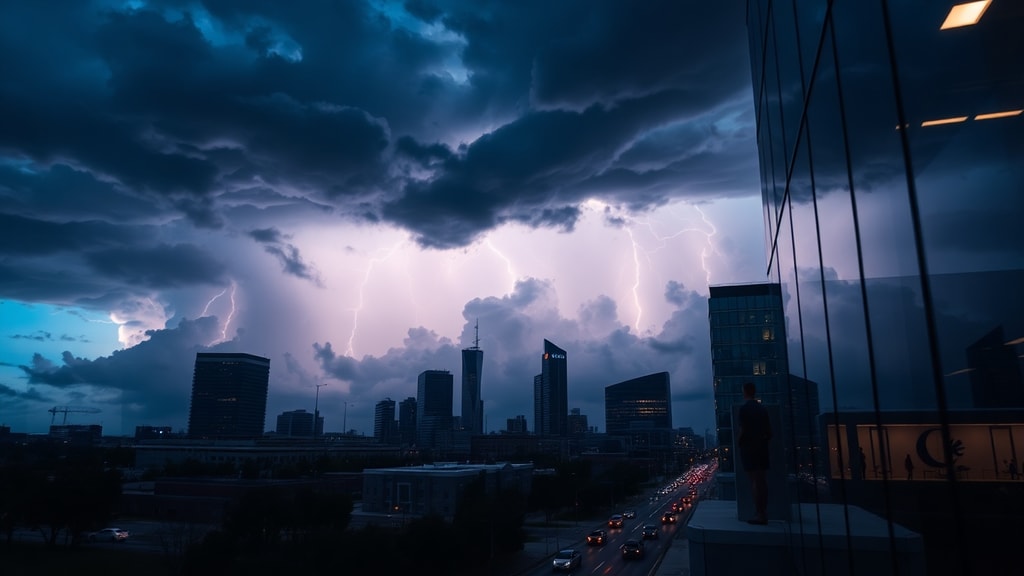
1) Introduction
Oklahoma City—often shortened to **OKC**—is a place where weather is not a backdrop but a daily headline. “OKC weather” refers to the atmospheric conditions over Oklahoma City, including temperature swings, wind patterns, humidity, precipitation, cloud cover, and, most critically for the region, the risk of **severe thunderstorms and tornadoes**. The city sits in the southern Great Plains, a geographic zone known for sharp contrasts in air masses.
In practical terms, OKC weather influences how residents plan everything: school schedules, outdoor work, commuting routes, agriculture decisions for nearby operations, and emergency preparedness during storm season. The region’s climate is characterized by **variable weather**—warm, stormy days that can shift rapidly due to changing fronts; winters that can bring cold snaps and ice events; and spring and early summer periods that can produce powerful convective storms.
But OKC weather is also a story about **measurement and forecasting**. Weather in a major metropolitan area is affected not only by large-scale systems (like jet stream shifts and frontal boundaries) but also by local factors: the heat-island effect in denser neighborhoods, differences in ground cover, and even changes in how the city’s terrain and built environment channel winds. That means two blocks can experience different temperatures or cloud timing, while neighborhoods along river corridors may feel different humidity and fog formation than areas further from those water features.
Understanding OKC weather therefore requires two lenses at once: the meteorology of the Plains and the real-world behavior of weather as experienced by people living in an urban environment.
2) The Catalyst
OKC weather is trending right now because the region has experienced a renewed wave of public attention around **severe weather awareness**, forecast reliability, and the timing of storm alerts—exactly the issues that go viral when conditions become volatile. In recent seasons, social media has amplified clips of dramatic storm cells, sudden hail, and rapid tornado warning events. Each time a major storm line sweeps through the Oklahoma City metro, residents quickly turn to real-time weather apps, radar loops, and local alert systems.
What makes this particularly “hot” in the moment is the convergence of three triggers:
1. **A persistent pattern of fast-changing spring-to-summer conditions**—warm fronts meeting cooler air can generate repeated thunderstorm bursts.
2. **Improving but still imperfect forecasting tools**—new radar processing, more frequent updates, and enhanced risk communication have raised expectations. When forecasts miss by hours, or when storm timing shifts slightly, the public notices.
3. **Higher engagement during warning windows**—when people share screenshots of radar tracks and alert timelines, OKC weather moves from “utility information” to “live digital narrative.”
In short: OKC weather trends when the sky becomes active and the public’s need for clarity outpaces generic messaging. The result is an information rush, and that rush becomes visible online.
3) Deep Dive
A meteorological primer: why OKC weather can turn sharp and fast
Oklahoma City lies where warm, moist air from the south can collide with cooler, drier air from elsewhere. In the Great Plains, storms often form along boundaries where instability is strongest. When wind shear—the change in wind speed and direction with height—lines up favorably, thunderstorms can organize into structures capable of producing damaging winds, large hail, and tornadoes.
This is why “OKC weather” isn’t merely about temperature. Wind direction, humidity, and the vertical profile of the atmosphere—how conditions change with altitude—determine whether storms become ordinary downpours or severe hazards.
Historical context: the culture of preparedness
Oklahoma City’s weather history includes major outbreaks and memorable severe events that shaped public habits. Over decades, residents learned that forecasts are not comfort—they’re instructions. The cultural language of warnings, sirens, and shelter planning became part of everyday life. Even people who rarely check radar during winter often intensify their attention during spring and early summer.
That history matters because it influences interpretation. When a radar signature appears, experienced residents often read it through a long memory of how certain storm behaviors precede impacts. Newcomers may rely on temperature and cloud cover alone; locals tend to ask more specific questions: Where is the inflow? How fast is the line moving? Is there evidence of rotation? Are warnings being updated?
The urban factor: microclimates within the metro
OKC’s weather is not uniform across its footprint. Asphalt and buildings store heat and can slightly shift temperature patterns. Urban areas can also influence where storms become more intense—sometimes by altering local convergence zones, sometimes simply by changing how observers experience wind and rainfall.
The second-order implication is straightforward but important: **a single forecast for “Oklahoma City” can conceal neighborhood variation**. For residents, that means “my area is fine” doesn’t always apply to the next community over. Emergency planners know this; forecasters work to communicate uncertainty more explicitly; and residents increasingly interpret radar themselves.
Forecasting and communication: better tools, higher expectations
Modern OKC weather prediction benefits from denser observational networks, improved radar interpretation, and better data assimilation into numerical weather models. When the pipeline works, warnings update quickly and earlier, potentially reducing harm.
But there is a tradeoff. As forecasting capability improves, the public becomes less tolerant of ambiguity. A warning that is “reasonable” in meteorological terms may be frustrating to someone who expected certainty. This is where the second-order effect emerges: people may abandon caution if the system produces too many false alarms—or conversely may panic if a warning escalates without matching real-time conditions where they are.
The healthiest approach is to treat warnings as probabilistic guidance, not guarantees. In OKC weather, that means understanding the difference between watch and warning, knowing how to interpret radar movement (not just static images), and preparing based on hazard potential rather than immediate sky appearance.
Why “OKC weather” matters economically and socially
Weather in Oklahoma City affects more than personal comfort. Severe storms influence insurance claims, local infrastructure maintenance, traffic safety, and business continuity. Agriculture and energy systems also track conditions closely—rain timing can decide planting schedules, while wind and heat influence power demand.
Socially, the risk is uneven. People with reliable transportation, resources for preparedness, and flexible schedules can respond better than those who cannot. That’s why improving communication—translating technical forecasts into actionable guidance—has real public value.
4) Future Outlook
Looking ahead, my prediction is that **OKC weather will become more “interactive” and hyper-local**—not just because meteorology improves, but because technology and user behavior are converging.
Here’s what I expect to see:
Yet the core truth will not change: OKC weather is inherently dynamic because the Plains supply energy to storms under the right alignment of air and wind. The goal is not to eliminate uncertainty—it’s to **reduce harm** by preparing for probabilities, not promises.
In the coming seasons, expect “OKC weather” to trend even when the sky is merely unsettled—not because every day will be dangerous, but because residents will demand clarity faster than ever. If forecasters and communication channels keep improving, Oklahoma City will continue to move from reacting to storms toward anticipating them—with sharper, smarter, and more humane responses.