Patrice Lumumba: The Man, the Movement, and the Global Struggle Over Memory
Published: June 24, 2026
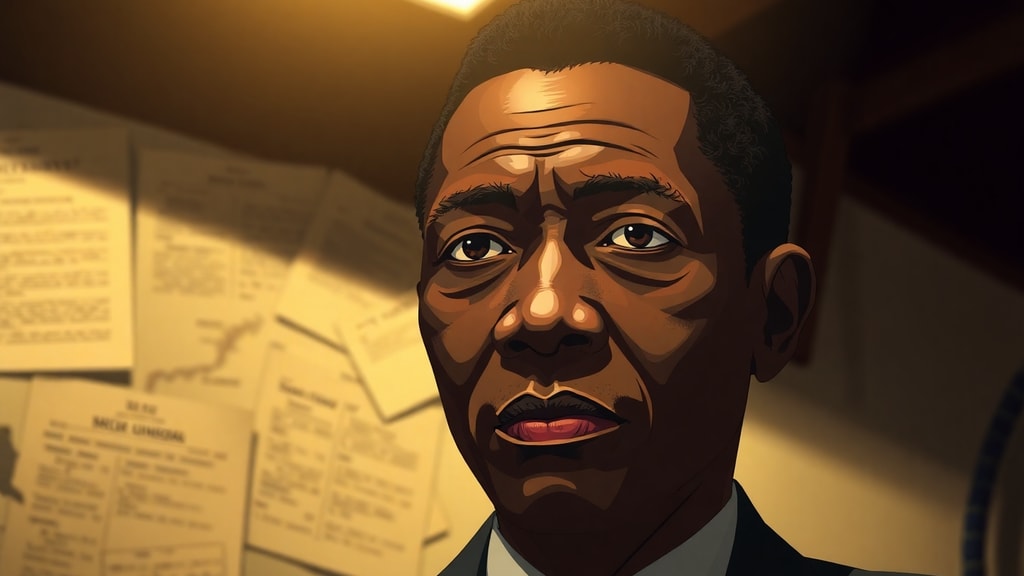
Introduction: Who Patrice Lumumba Was—And Why He Still Matters
Patrice Émery Lumumba (1925–1961) was the first Prime Minister of the independent Republic of the Congo—today’s Democratic Republic of the Congo (DRC)—and the most enduring symbol of early postcolonial resistance to foreign control in Central Africa. Born in 1925 in the Katanga region (then part of the Belgian Congo), Lumumba rose from a life shaped by colonial labor systems into political leadership marked by a single, uncompromising idea: Congo must govern itself, on Congolese terms, and international influence must not substitute for national authority.
To understand Lumumba as a figure, it helps to be precise about what he represented. He was not merely an anti-colonial politician in the abstract. He was a mass-nationalist leader who fused parliamentary ambition with a revolutionary moral claim—that independence without true sovereignty would be a change of flags without a change in power. As Congo moved toward independence in the early 1960s, Lumumba became the political architect of a new state structure: he argued for a unified Congo rather than a fragmented constellation of regions with externally supported autonomy.
His leadership style carried a particular tension. Lumumba was a charismatic orator, but his influence was also institutional—rooted in party politics and the bargaining realities of newly independent governance. He navigated a high-stakes environment where the formal machinery of statehood had to be assembled quickly, while the strategic machinery of Cold War geopolitics was already fully operational.
When he eventually took office, Lumumba’s tenure was defined by a battle over the meaning of independence. In practical terms, that battle became a contest over who controlled security, who commanded the administrative apparatus, and whose international partners—if any—could legitimately advise or assist the Congo’s future.
The Catalyst: Why Patrice Lumumba Is Trending Now
Patrice Lumumba has resurfaced globally as a trending subject for a specific, modern reason: the acceleration of “memory politics” in the digital era—where declassified materials, documentary storytelling, political speeches, and archival images circulate with unprecedented speed, often reactivated by contemporary events.
In recent years, several converging triggers have intensified public attention on Lumumba:
1. **Renewed calls for historical accountability and restitution** linked to colonial-era harm, including legal and diplomatic debates in Belgium and other former colonial powers.
2. **Public release and amplification of archival content**—from journalistic investigations to documentary work—that revisits the early 1960s Congo crisis with sharper sourcing and wider international distribution.
3. **Contemporary political rhetoric in the DRC and beyond** that treats Lumumba as a standard for sovereignty, institutional legitimacy, and resistance to external interference.
4. **Digital activism and algorithm-driven media cycles** that favor symbolic figures with clear moral narratives—Lumumba’s life is frequently presented as a “before-and-after” emblem of independence’s promise and betrayal.
The result is not just nostalgia. Lumumba is trending because the question he posed—*Who gets to decide the fate of a newly independent nation?*—has direct relevance to today’s debates over sanctions, foreign military training, extractive-sector contracts, diplomatic leverage, and the legitimacy of governments formed amid internal fragmentation.
In short: Lumumba is trending because global audiences are once again confronting the mechanics of influence, and his story offers a high-contrast case study.
Deep Dive: Context, History, and Second-Order Implications
1) The Historical Backdrop: Independence in a Cold War Pressure Chamber
Lumumba’s rise occurred during a period when Congo was not only politically unstable but strategically valuable. The Congo crisis unfolded in the early Cold War—an era when superpowers treated geography and resources as security assets. Even when rhetoric leaned on ideals like democracy, alliances were often maintained through influence channels: intelligence partnerships, diplomatic recognition, security arrangements, and economic leverage.
Lumumba’s insistence on Congolese unity put him at odds with regional leaders who were supported—directly or indirectly—by external interests seeking either leverage over Congo’s internal balance or control over key resource corridors. This is one of the most important historical truths about the Lumumba era: the crisis was not merely a domestic succession drama. It was a contest over state form.
2) Why Lumumba’s Vision Became So Polarizing
Lumumba’s politics were polarizing for two reasons that still echo today.
First, his vision required a functioning central state. That made him a threat to actors who benefited from regional autonomy, external patronage, or semi-protected power centers. Unity was not a slogan; it was a demand for administrative and security consolidation.
Second, Lumumba’s international posture challenged the expectations of major powers. In early postcolonial politics, “independence” could be framed as a handover of flags while maintaining external direction. Lumumba’s approach implied a harder sovereignty—one that would renegotiate relationships rather than simply inherit them.
This is where his legacy becomes analytically rich: he is not only remembered for what he opposed, but for what he insisted on building.
3) The Second-Order Implication: How Lumumba Became a Global Template
When a political figure becomes an international symbol, their historical specifics often compress into a moral template. Lumumba now functions as such a template—sometimes accurately, sometimes simplistically.
Second-order effects of this symbolic function include:
Second-order implication, in Bob’s journalistic terms: Lumumba is now a “reference point” in the global vocabulary of sovereignty. His story is treated less as a distant tragedy and more as evidence in ongoing arguments about legitimacy.
4) The Memory War: Archives, Documentary Culture, and Competing Truths
A modern reality shapes Lumumba’s resurgence: the struggle over archives. Who controls documents? Who gets to interpret them first? Who is permitted to narrate the past?
The more digital reproduction accelerates, the more historical accounts become contested in public. People argue not only about what happened, but about what counts as proof. In that sense, Lumumba’s legacy—already contested in the early 1960s—has entered a new phase: contestation via media ecosystems.
This is not merely cultural. It is political. Memory influences legitimacy, and legitimacy influences international engagement. When public consensus shifts, foreign policy shifts with it.
Future Outlook: Bob’s Forward Prediction for Lumumba’s Legacy
Looking ahead, Patrice Lumumba’s legacy will not fade; it will *evolve*.
My prediction is that Lumumba will increasingly function as an anchor in two parallel trajectories.
1. **A sovereignty-and-institutions conversation**—where political actors and civil society groups use his story to argue for state capacity: credible security systems, transparent governance, and reduced dependency disguised as “partnership.”
2. **A transparency-and-archives conversation**—where governments and international bodies face growing pressure to disclose historical records related to colonial-era and early-independence interventions.
Over the next decade, we are likely to see more documentary investigations, more public debates over restitution and accountability, and more educational curricula revisions—especially as younger audiences demand sources rather than slogans.
Lumumba will remain central because he occupies a rare historical position: the intersection of independence, international power, and the human cost of a struggle over control. In an era when influence is exercised through contracts, training programs, and information channels, the question Lumumba posed returns in modern form: *Who truly governs?*
And the answer—disputed, renegotiated, and relentlessly re-litigated in public—will keep his name in circulation.