San Francisco 49ers: The Franchise That Turned Modern Football Into a Year-Round Signal
Published: August 10, 2026
Introduction: Who the San Francisco 49ers Are—Inside the Business of a Modern NFL Franchise
The **San Francisco 49ers** are not merely a National Football League team based in the Bay Area; they are a complete organizational machine that treats football as both a sport and a continuously engineered system. Founded in 1946, the franchise built its reputation through multiple eras of prominence, including championship runs that cemented its place in American sports mythology. Yet what distinguishes the 49ers in the current NFL landscape is less about nostalgia and more about how the organization behaves year-round.
At the center of the 49ers’ identity is their commitment to building **physical, disciplined football**—an approach that historically features strong defensive principles, methodical offensive schemes, and a roster culture that prizes preparation. But the deeper story is operational. The organization has repeatedly demonstrated an ability to coordinate scouting, coaching development, conditioning, and roster strategy into a single, coherent cycle. In modern NFL terms, that means the 49ers have acted like an institution that understands the difference between short-term wins and long-term capability.
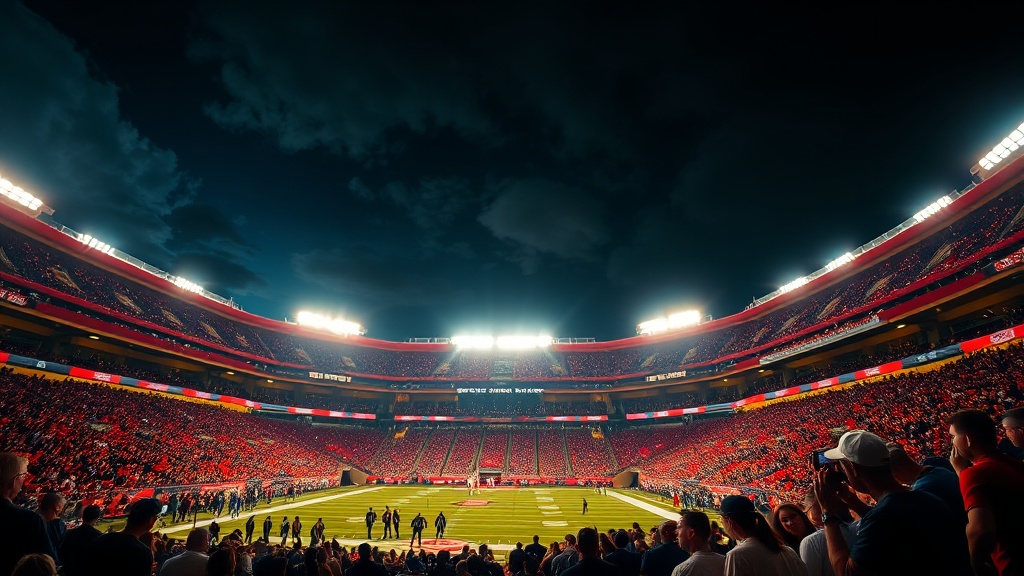
The team’s “who” also includes the ecosystem around it: the **Levi’s Stadium** experience, the Bay Area fan culture, and the league-wide media attention that follows the franchise. San Francisco is a market that demands competence and narrative. The 49ers have learned that competence alone is insufficient—fans, broadcasters, and sponsors all respond to a consistent story of identity. Whether the franchise is emphasizing defensive intensity, offensive versatility, or quarterback maturity, it signals a clear through-line.
That clarity matters because the NFL is not static. Every offseason reshapes the competitive map: free agency shifts talent density, the draft injects youth into schemes, and coaching changes re-interpret playbooks. The 49ers have navigated those changes with a recognizable internal logic: build a team that can withstand volatility—injuries, matchups, and momentum swings—without losing its core principles.
The Catalyst: Why the 49ers Are Trending Right Now
The San Francisco 49ers are trending right now because the franchise sits at the intersection of three forces that the NFL world is watching simultaneously: **high-stakes quarterback pressure**, **late-game execution expectations**, and the league’s broader conversation about **roster construction and competitive window management**.
In the most recent cycle of coverage—spanning training-camp chatter, preseason narratives, early regular-season matchups, and social-media debates around roster moves—fans and analysts have focused on a question that defines modern fandom: *Is this team optimized for the present, or are they building for the next wave?* The 49ers’ activity in and around the quarterback room, offensive coordinator adjustments, defensive personnel refinement, and depth chart volatility has become the kind of storyline that drives repeated engagement.
Add to that the way the NFL ecosystem amplifies San Francisco’s profile. The 49ers are a national brand: whenever they play, their roster decisions become public arguments. That means even routine outcomes—an injury update, a subtle schematic tweak, a practice-season performance from a less-heralded player—can quickly turn into national headlines.
In short, the catalyst is not one single moment; it’s the convergence of a franchise identity with a league-wide obsession: **competitive legitimacy under scrutiny**. When a team like the 49ers is expected to contend, every detail becomes content.
Deep Dive: Analytical Context, Historical Background, and Second-Order Implications
To understand why the San Francisco 49ers continue to command attention, it helps to examine their evolution through the lens of organizational learning.
From Dynasty Patterns to Modern Systems
Historically, the 49ers have achieved success by aligning talent with coaching philosophies. But modern NFL winning is less about raw star power alone and more about systemic repeatability. The 49ers have increasingly treated their approach as a feedback loop: identify what their defense and offense do best under stress, recruit players who fit those demands, and coach to reduce variance.
The result is a football identity that tends to look consistent even when individual personnel changes. That “stability with adaptation” is rare. Many franchises oscillate—chasing trends, reacting late, and patching holes with short-term decisions. San Francisco has often instead tried to maintain a core blueprint while tuning the mechanics.
The Quarterback Conversation as a Market Signal
Modern football places the quarterback at the center of both performance and perception. With the 49ers, that role becomes a public barometer. Fans debate decisions because they understand that quarterback development is not just a football issue—it’s an institutional timeline.
If the 49ers can successfully manage the quarterback trajectory—whether that means a veteran optimizing reads within a scheme or a younger player absorbing complexity—then their entire model strengthens. The first-order impact is obvious: better play at quarterback usually improves offense efficiency.
But the second-order impact is what separates strong franchises from merely talented ones. A stable quarterback environment improves:
In this sense, the 49ers’ quarterback narrative functions like an investment thesis. If the franchise executes, they preserve their competitive window.
Defense as Identity—And Offense as Proof
The 49ers’ defensive tradition matters not just because it produces stops, but because it shapes how the offense is allowed to operate. A defense that can pressure without conceding explosive plays changes game theory. That affects play-calling ratios, tempo choices, and risk tolerance.
Meanwhile, the offense’s job in a modern scheme is to demonstrate that the team can convert defensive advantages into points reliably. That reliability is increasingly measured in advanced ways: third-down efficiency, red-zone conversion rate, explosive play frequency, and situational turnover control.
When the 49ers perform these tasks, they are not only winning games—they are reinforcing their organizational credibility. In elite sports, credibility becomes a recruiting advantage. High-performing coaches and players want environments where the operational standards are clear.
Second-Order Implications for the League
The 49ers are also significant to the league because they model a particular strategy: compete with structure. In a league where many teams are tempted to chase volatility—overcorrecting through repeated roster turnover—the 49ers illustrate an alternative.
If they keep operating like a system rather than a sequence of reactions, their example becomes a template. Other franchises will attempt to copy aspects: roster construction philosophies, training emphasis, and the balance of analytics with football instincts.
That ripple effect matters because the NFL is not just entertainment; it is a competitive marketplace. Teams are learning to treat roster building as a statistical and developmental process—while still acknowledging that football outcomes include uncertainty.
Future Outlook: Bob’s Prediction—A Franchise Built to Make the Next Window Feel Like the Last
As Bob, I will make a forward-looking prediction grounded in what the 49ers have consistently demonstrated: when they are at their best, they don’t simply “have a good roster”—they have a **repeatable way to generate high-level performance**.
My prediction is that the San Francisco 49ers will continue to position themselves as a contender by prioritizing three connected priorities: **quarterback stability or rapid development**, **defensive continuity with strategic upgrades**, and **offensive identity that adapts without losing its rules**.
In practical terms, that means the next year or two should not be judged only by wins and losses. Judge it by whether the team’s decisions reduce variance: fewer identity shifts, fewer schematic reversals, and fewer roster gambles that force a long re-education cycle.
If the 49ers maintain that operational discipline, their competitive window will likely feel longer than it actually is—because they will be ready for transitions before other teams realize they are happening.
In the NFL, that is the difference between a famous franchise and a perpetually dangerous one. The San Francisco 49ers, by design, are built to stay dangerous.