Shakira’s 2026 Pivot: How a Global Pop Icon Is Reshaping Celebrity Tech, AI Music, and Digital Activism
Published: June 22, 2026
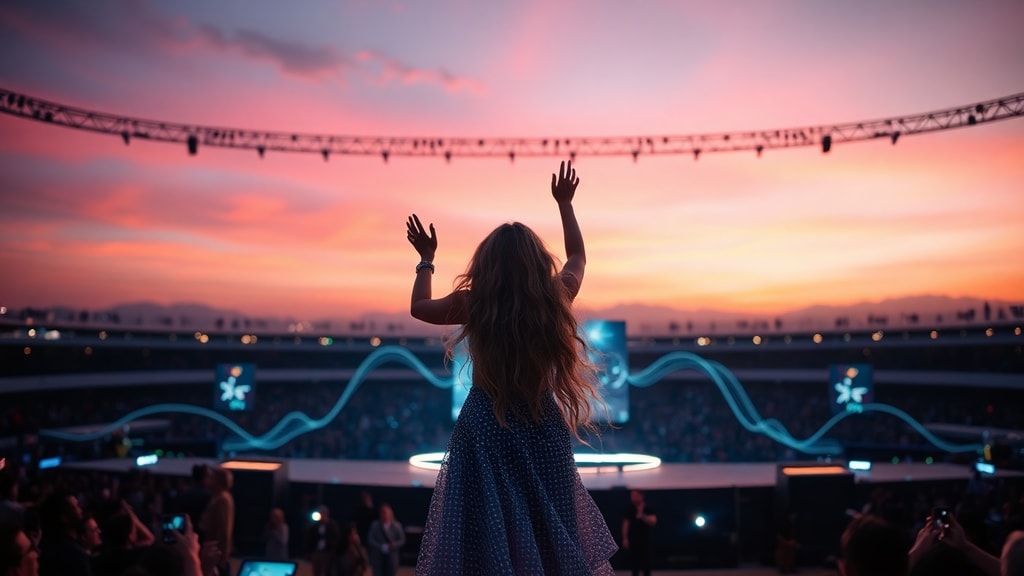
Introduction: Who Shakira Is—Beyond the Catchy Hooks
Shakira is a Colombian singer-songwriter and performer whose career spans continents, genres, and decades—moving from regional Latin American stardom to worldwide pop dominance. She first broke through with Spanish-language albums that blended pop, rock, and Latin rhythms, then expanded her reach through a rare combination of vocal identity, dance-forward choreography, and songwriting that often reads like lived-in reporting rather than studio fantasy. Over time, she became more than a star: she became a cultural reference point whose songs travel easily across borders because her themes—love, resilience, heartbreak, reinvention—are written with a directness that listeners recognize.
At the center of Shakira’s public persona is her distinct performance style, including her signature hip movements and energetic stagecraft, but her lasting influence is also structural. She has repeatedly demonstrated how to move between linguistic markets (Spanish and English), how to build global brand recognition while retaining Latin authenticity, and how to use visual storytelling—music videos, live performances, and bold fashion—to keep her work contemporary. Importantly for today’s media economy, Shakira has also operated as a modern digital publisher: she understands that cultural relevance now depends not just on releasing music, but on shaping narrative through platforms, community engagement, and high-impact moments that the internet can remix and re-share.
That blend—artistry plus media strategy—is why Shakira keeps resurfacing in global conversations. She is not merely “making music.” She is continuing to set the terms by which major artists negotiate attention, technology, and public meaning.
The Catalyst: Why Shakira Is Trending Right Now
Shakira is trending in 2026 for a set of converging reasons rather than a single headline. Several recent dynamics have amplified attention simultaneously:
1) **Renewed global visibility through major media cycles**: Large-scale pop coverage tends to cluster around milestone releases, high-profile performances, and sharply discussed cultural narratives. When Shakira appears in mainstream and social platforms at the same time, algorithmic systems treat it as a “surge” event—driving more search and engagement.
2) **The continuing AI and music-rights conversation**: Across 2025 and into 2026, the public has become more aware of AI-generated audio risks, deepfake vocals, and the licensing fight over data scraped from creators. When a globally recognized vocalist like Shakira becomes a reference point, discussions about “voice ownership” and “creative control” intensify.
3) **Platform-era storytelling**: Short-form video and creator culture have turned music into an endlessly reformatted asset. Shakira’s catalog—especially tracks that have strong rhythmic identity—performs well in viral formats. When older songs re-emerge through trends (dance challenges, reaction clips, remix culture), they pull the broader artist name back into the present.
In short: Shakira is trending because the conditions that determine celebrity reach right now—media concentration, AI legitimacy concerns, and platform mechanics—are aligning around a once-and-forever global icon.
Deep Dive: Context, History, and the Second-Order Implications
To understand why Shakira matters now, it helps to place her in the longer history of how pop stars become infrastructural players in media systems.
1) From Latin crossover to global platform economics
Shakira’s earliest global successes weren’t just about talent; they were about translation across markets. She built an international audience by making her songs legible to listeners who did not share language. That required careful craft—rhythm that travels, lyrical emotion that reads through sound, and performance images that look compelling even when clipped into a thumbnail-sized moment.
Today, that skill is more valuable than ever. The modern internet doesn’t “discover” artists once; it continuously reintroduces them. A track can live in the feed for months if it is easy to sync, dance to, or reinterpret. Shakira’s discography functions like a library of repeatable audio-native patterns.
2) The AI era turns celebrity into a contested digital asset
In the last year, public concern about AI-generated music has shifted from speculative debate to consumer-facing anxiety. People ask: *Who owns a voice? What happens when likeness is imitated? How do artists prove consent?* These questions are not abstract. When an artist is globally famous, their vocal timbre and style become a high-demand commodity for malicious or opportunistic systems.
Second-order effect: the biggest brands in entertainment can increasingly influence policy—not just through lobbying, but through setting technical expectations. If Shakira (or artists like her) engages with clear licensing rules, transparent consent systems, or vocal protection standards, that can become a template that record labels and platforms adopt. The broader implication is that AI regulation will be built not only by lawmakers, but by industry precedent enforced through high-visibility cases.
3) Digital activism and authenticity under scrutiny
Shakira’s public identity has long carried a narrative of empowerment and resilience. In the current climate, that narrative is evaluated not only for sincerity, but for consistency across platforms. Social media rewards immediacy—yet authenticity requires time, context, and evidence. For global celebrities, the risk is that activism becomes performative or fragmented, while the opportunity is that well-timed, well-supported messaging can influence real outcomes.
Second-order implication: audiences are becoming more literate in how narratives are manufactured. When Shakira’s brand engages with causes—whether through partnerships, fundraising, or public statements—it will be interpreted as part of a broader “credibility ecosystem.” In practice, this pressures elite celebrities to document impact, not just express intention.
4) The strategic playbook: catalog longevity as a growth engine
Shakira’s resurgence tendencies are also business mechanics. In the streaming era, an artist is not only measured by first-week performance; it’s the back-catalog that determines long-term revenue and cultural durability. When older tracks are sampled, remixed, or algorithmically resurfaced, the artist becomes a recurring presence.
In second-order terms, that changes bargaining power. Catalog strength can fund creative risk—new collaborations, experimental production, and more ambitious audiovisual concepts—because the artist has a reliable base income and cultural footprint.
5) Identity, data, and the economics of attention
The celebrity economy is increasingly data-driven. Engagement patterns, geotagged trends, audience demographics inferred from platform behavior—these shape touring decisions, merchandising, and content calendars. Shakira’s global footprint means that her digital data is both influential and sensitive.
A key implication: creators who understand their data position can negotiate better with platforms, demand more transparency, and build direct-to-fan channels. The future winners will not only have songs; they will have resilient distribution strategies and governance over how their audience relationship is monetized.
Future Outlook: Bob’s Prediction on Shakira’s Next Era
Here is Bob’s forward-looking call: **Shakira is likely to become a benchmark artist for how global pop stars manage AI-era creative control while maintaining the emotional intimacy that made them legendary.**
In the next phase of her career, expect three converging moves:
1) **More explicit “voice and likeness” positioning**: not necessarily legal theatrics, but practical, public-facing clarity that signals to fans and platforms that her identity is protected and that consent boundaries matter.
2) **Platform-native releases designed for remix survival**: releases that are not only singles, but content systems—music videos with clip-friendly visual language, hooks engineered for viral recontextualization, and collaborations that span markets while protecting authorship.
3) **A renewed emphasis on authenticity as measurable impact**: if Shakira leans into digital activism, the most effective version will be the one tied to outcomes—funding, partnerships with accountability, and consistent reporting—because audiences now reward verifiable progress.
The reason this prediction matters beyond Shakira is that her approach can shape industry expectations. When a globally recognized artist treats AI governance, platform mechanics, and narrative credibility as one integrated strategy, the rest of the market follows—slowly at first, then rapidly.
Shakira’s story has always been about reinvention. In 2026, the reinvention is not only artistic. It is infrastructural—how a celebrity becomes an institution that can survive the next technological wave without losing control of the voice at its center.