Star Wars in 2026: How a Science-Fiction Saga Became a Global Cultural Operating System
Published: August 9, 2026
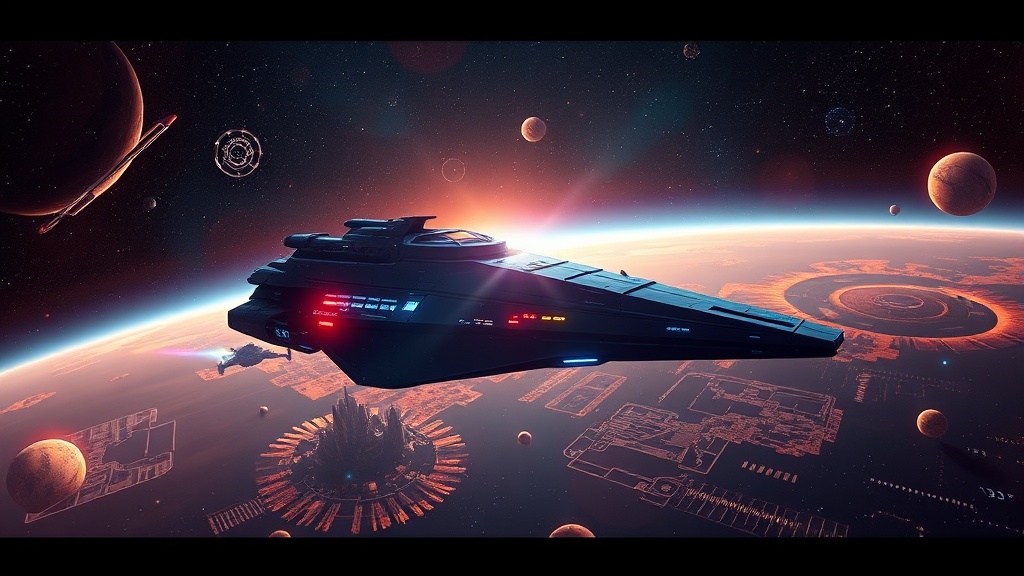
Introduction: Who “Star Wars” Is—And What It Actually Builds
“Star Wars” is a science-fiction franchise created by George Lucas that began as a 1977 feature film and evolved into a vast multimedia universe spanning movies, television, animation, novels, comics, video games, theme-park experiences, merchandise ecosystems, and fan-made culture. At the center of the franchise is a narrative engine powered by archetypal storytelling—conflict between the forces of order and rebellion, a moral struggle defined by personal choice, and a mythic “chosen one” structure that recurs across eras.
The franchise’s best-known storyline follows characters such as Luke Skywalker, Princess Leia Organa, Han Solo, Darth Vader, and later generations like Rey and Kylo Ren. But that headline cast is only the visible layer. Underneath is a systematic worldbuilding framework: factions with distinct ideologies (the Galactic Empire and the Rebellion; the First Order and the Resistance), recurring symbols that communicate values at a glance (light sabers, helmets, starfighter silhouettes), and a consistent “rule set” for how technology, politics, and belief systems interact across thousands of planets.
Importantly, Star Wars is not merely science fiction; it is a *popular narrative platform*. It teaches audiences a recognizable template for interpreting conflict: tyranny is bureaucratic and militarized; resistance is adaptive and communal; hope is embodied in mentorship and in the refusal to surrender agency. Those themes are reinforced through visual language—color-coded uniforms, clear costume motifs, iconic music cues—and through structure: the franchise routinely returns to the idea that the smallest actions can reverse systemic power.
In the modern media landscape, that kind of repeatable mythic structure behaves like an “operating system” for culture. People use it as a vocabulary: to talk about rebellion, duty, redemption, and legacy. That is why Star Wars can feel simultaneously nostalgic and future-facing.
The Catalyst: Why Star Wars Is Trending Again Right Now
Star Wars is trending in 2026 for a cluster of converging reasons rather than a single event. The catalyst is a feedback loop between (1) fresh on-screen releases and (2) high-visibility cultural reinvigoration—where new installments, cast visibility, and online community activity mutually amplify each other.
In recent cycles, Star Wars content has continued to attract attention because it increasingly targets multiple entry points at once:
The second-order trigger is that fandom has matured into a sophisticated media literacy community. Fans don’t only celebrate; they analyze canon, debate timelines, track production decisions, and share theory content at scale. That makes Star Wars not just content, but a participatory system.
When new episodes or announcements arrive, the community’s reaction becomes a visible signal—turning curiosity into viewing and viewing into deeper fandom participation. That’s why “Star Wars” continues to trend: it operates like an engine, not a moment.
Deep Dive: Historical Background and Second-Order Implications
The historical design: Why it never stopped working
Star Wars succeeded at first because it offered an escape that felt technical and coherent. Lucas didn’t treat space fantasy as vague spectacle; he treated it like a constructed reality with engineering details, distinctive vehicles, and consistent visual grammar. The franchise’s continuity—however messy across decades—still follows an emotional physics: characters move through a system of choices, consequences, and moral feedback.
The original trilogy established the template: an underdog who grows; a mentor who pays a price; a villain who is both ideological and personal. Later eras layered complexity—ethics of power, generational trauma, and the cyclical nature of empires.
The “mythic technology” of branding
Modern franchises often rely on plot alone. Star Wars relies on *symbolic throughput*. Every era gives audiences a short list of recognizable elements:
This matters because it translates into marketing efficiency and audience memory. When viewers encounter a clip out of context—someone igniting a blade, a ship banking over a desert planet—they can still decode what kind of story they are entering.
Second-order implications: How Star Wars shapes audience behavior
The franchise influences more than taste; it influences how people behave in media.
1. **Expectation-setting for cinematic myth**: Star Wars has normalized the idea that space opera should have serialized emotional logic. Audiences now expect worldbuilding to be more than scenery; it must be a consistent causal structure.
2. **Fan-driven accountability**: Modern Star Wars fandom does not simply consume. It scrutinizes timeline coherence, character motivations, and production choices. That feedback loop pressures creators to respect internal logic while still innovating.
3. **Cultural diplomacy through shared references**: Star Wars is one of the few global franchises where references cut across language barriers. Even people who have never watched a film can understand the emotional meaning of “the dark side,” “hope,” and “the rebellion.” That makes it a kind of international cultural shorthand.
4. **Technology aesthetics as aspirational design**: The franchise’s ships, interfaces, and weapon forms inspire real-world creativity—industrial design, cosplay engineering, and interactive media aesthetics. It’s not just escapism; it’s a creative prompt.
5. **The platform effect on streaming and fandom economy**: Star Wars demonstrates how a legacy franchise can remain commercially resilient by combining episodic formats with ongoing community discourse. The result is a durable “always relevant” model.
A subtle but crucial point: it’s about agency
Across decades, Star Wars keeps returning to one message: systems change when individuals choose responsibility. That is why the franchise can absorb new characters without breaking the emotional promise. The audience may debate details, but it rarely disputes the core moral mechanism.
That moral mechanism is exactly what makes Star Wars behave like an operating system for culture. It supplies a stable meaning framework while allowing superficial updates—new costumes, new tech, new settings—to keep the engine visually fresh.
Future Outlook: Bob’s Forecast for Star Wars After the Next Wave
My prediction is that Star Wars’ biggest growth will not come only from bigger budgets or more releases. It will come from deeper integration—where the franchise becomes more experiential, more modular, and more personalized.
Three likely directions stand out:
1. **More era-spanning storytelling as “micro-myths”**: Instead of asking audiences to wait for a single cinematic payoff, Star Wars will continue to deliver self-contained emotional arcs across different time periods—stories that can be consumed like chapters in a living legend.
2. **Stronger interactive ties to the canon conversation**: Expect more creator-to-community dialogue, more theory-friendly breadcrumbs, and more “connective tissue” that rewards careful viewing without requiring a PhD in continuity.
3. **Globalization of myth through localization and format diversity**: Star Wars will likely accelerate content accessibility across regions—using language localization and varied distribution formats—so that more cultures can treat the franchise as their own reference system.
If these trends hold, Star Wars will keep evolving from a film franchise into a continuing cultural infrastructure: a place where people practice identity, debate meaning, and rehearse—symbolically—the idea that resistance can be organized and hope can be engineered.
In short: the saga endures because it is both story and system. And in 2026, that combination is more valuable than ever.