Super PACs, Explained: How Supercharged Campaign Money Is Reshaping US Politics
Published: June 21, 2026
Introduction: What a Super PAC Is—And What It Is Not
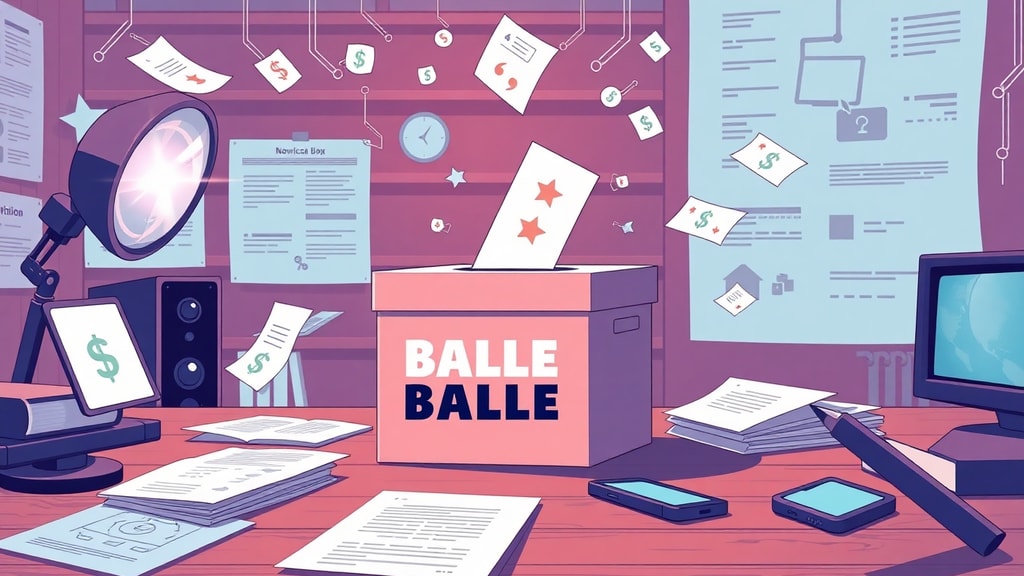
A **Super PAC**—officially known as an **independent expenditure-only political committee**—is a type of political committee in the United States created to allow large-scale political spending in elections. Unlike traditional political action committees (PACs), which can be subject to tighter contribution limits and rules about coordination, a Super PAC is structured around one core legal distinction: **it may raise and spend unlimited amounts of money to influence elections, but it may not coordinate those expenditures with candidates or political parties**.
To understand Super PACs in practical terms, imagine the US campaign ecosystem as a set of separate “rooms.” Candidates and their official campaign organizations operate in one room. Political parties and their campaign committees operate in another. Super PACs operate in a third room—legally independent—yet their spending aims at the same elections, the same voters, and sometimes the same messaging themes.
Super PACs can accept contributions from a wide range of sources, including **individuals, corporations, labor organizations (through certain arrangements), and other entities**. They can use that money to fund activities such as:
However, the law draws a line at **coordination**. Super PACs are prohibited from working with candidates’ campaigns to plan strategy, synchronize spending, or share information in a way that would amount to collaboration. The challenge is that campaigns, consultants, donors, and messaging ecosystems often overlap in real life—even if formal coordination is forbidden.
So when journalists say Super PACs “spend without limits,” what they usually mean is that the committee can raise and spend far beyond the contribution caps that apply to direct donations to candidates and traditional PACs. This changes the scale of campaign influence, often shifting attention from grassroots fundraising to the decisions of a relatively small number of donors and political operators.
How the legal architecture works
The term “Super PAC” reflects a post-2010 political finance environment. Under US election law, Super PACs are designed to make **independent expenditures**—spending “independent” of candidate campaigns. This independence is policed through compliance standards and enforcement, including reporting requirements to the Federal Election Commission (FEC) and legal scrutiny of coordination risks.
In short: **a Super PAC is a money-raising and money-spending machine for independent political persuasion, built to avoid direct contribution limits while navigating the coordination ban.**
---
The Catalyst: Why Super PACs Are Trending Right Now
Super PACs are trending again for a blunt reason: **they remain one of the most visible, high-impact funding channels in US elections—and recent campaign cycles have intensified scrutiny of who funds political messaging and how transparency works in practice.**
Several recurring triggers have amplified the spotlight:
1. **High-dollar advertising cycles**: Major election seasons increasingly feature ad campaigns where Super PAC expenditures dominate the public conversation—especially in battleground states.
2. **Digital targeting and rapid-response spending**: Super PACs can move quickly in response to polls, events, and news cycles. As political advertising has migrated online, the pace of influence has accelerated.
3. **Legal and regulatory debates**: Court decisions and enforcement discussions continue to shape how independence is interpreted and how disclosure requirements are implemented.
4. **Public trust and polarization pressures**: When voters sense that messaging is driven by large outside donors rather than local priorities, skepticism toward institutions rises, turning Super PACs into a symbol of “moneyed politics.”
In global media terms, Super PACs are trending because they sit at the intersection of three modern realities: **election uncertainty, mass media fragmentation, and a fundraising market that rewards scale and speed.** In other words, Super PACs have become not just a financial tool, but a political communications infrastructure.
---
Deep Dive: Historical Context and Second-Order Implications
A brief history: from PACs to “independence-only” spending
Super PACs are best understood as an evolution of the broader PAC phenomenon. Political action committees existed to pool contributions for political purposes, but their activities were constrained by contribution limits. The shift toward unlimited spending came from a legal watershed in US campaign finance jurisprudence.
For years, the political finance system treated different forms of spending differently. Contributions were limited, but independent spending—spending not coordinated with candidates—was treated as more akin to political expression. The modern Super PAC era crystallized when the legal environment expanded the permissible scope of independent expenditures.
The resulting model created a strategic incentive: if unlimited spending is allowed for independent expenditures, then political entrepreneurs, donor coalitions, and aligned interest groups will move resources into structures that can legally operate independently.
Why Super PACs matter strategically
Super PACs have changed US campaigns in three ways.
**First, they separate fundraising from campaigning.** A candidate’s campaign must still manage within contribution rules, but Super PACs can raise large sums in ways that reduce the candidate campaign’s financial dependency. That sounds like an advantage—yet it also means **candidate incentives can become partially detached from donor preferences**, with messaging shaped by external funders.
**Second, they reconfigure political advertising economics.** Traditional campaigns might plan their media buys around candidate approval and fundraising constraints. Super PACs can treat ad production like a high-throughput content operation: monitor, test, and deploy messages rapidly—often with a narrower target audience than general-election messaging.
**Third, they introduce a credibility dilemma.** Many Super PAC ads are “independent” by design, but they still aim to influence the same electorate and often echo the candidate’s perceived weaknesses or opponents’ vulnerabilities. Voters may receive the messages while lacking clarity on who is paying and why.
Second-order implications: beyond the headlines
The most consequential effects of Super PACs are often indirect.
#### 1) Policy influence shifts from legislation to persuasion
Even when Super PAC money cannot buy votes directly, **it can shape the information environment in which policy preferences form.** If voters believe a candidate will support policies aligned with a specific interest group—because that belief has been drilled into public consciousness through advertising—then the downstream effect is policy pressure after elections.
#### 2) The “coordination boundary” becomes a public blind spot
The law’s independence framework is designed to prevent coordination. But enforcement challenges—plus the reality of shared consultants, overlapping staff networks, and common strategic interests—create a gray zone where the public often perceives coordination even when formal rules are followed.
This mismatch between legal independence and perceived coordination can corrode trust. The trust cost is not just reputational; it reduces the civic legitimacy of electoral outcomes.
#### 3) Campaign innovation accelerates while accountability can lag
Super PACs often operate with the urgency of markets: they fund what works, measure what lands, and scale quickly. This can drive innovation in political communications—especially digital targeting.
But accountability in politics does not move at the same speed as optimization. Transparency rules exist, yet rapid spending and complex donor networks can make it harder for average voters to understand the full picture before election day.
#### 4) Elections become more about outside narrative control
As more messaging is funded by independent committees, candidate campaigns may spend more effort countering external narratives. The public may not distinguish between candidate platform disagreements and independent attack framing. Over time, elections can drift from debates about governance toward contestable, heavily monetized storylines.
The global trend frame
Super PACs are a uniquely US institution, but they reflect a broader global pattern: **campaigns everywhere are increasingly financed and influenced through specialized intermediaries that can scale spending faster than parties or candidates.**
The US version is notable because it pairs legal permission for unlimited independent spending with modern advertising technologies. That combination makes Super PACs a high-powered test case for democratic resilience under conditions of financial asymmetry.
---
Future Outlook: Bob’s Prediction on Where Super PACs Go Next
Looking forward, the most likely trajectory is not the disappearance of Super PACs but their **evolution into more sophisticated political media and data operations**.
Bob’s forecast is three-part:
1. **More integration with advanced targeting tools**: Super PACs will increasingly deploy data-driven messaging that reacts to events and voter segments faster than traditional campaign infrastructure can.
2. **Greater legal and transparency pressure**: Expect renewed enforcement attention and possible legislative proposals aimed at closing perceived loopholes around donor disclosure, intermediaries, and coordination risk.
3. **A credibility-driven backlash**: As voters become more aware of outside spending influence, political legitimacy debates will intensify—potentially reshaping how parties communicate with electorates and how candidates manage “message environments” funded by others.
In plain terms: Super PACs will remain a defining feature of US elections, but the political system around them will likely tighten its compliance posture while also facing growing pressure to improve transparency and restore public confidence.
If democracy is a conversation, Super PACs are a loud speaker system—often speaking in the language of persuasion rather than governance. The next era will be about who controls the volume, how quickly the messages can be engineered, and whether voters can still tell which arguments are grounded in candidates’ plans versus externally purchased narratives.
That is the real trend: not just money, but **message power**—and the long struggle to keep elections anchored in democratic accountability.