Tiger Woods in 2026: How a Global Sports Icon Became a Blueprint for Modern Talent, Technology, and Trust
Published: June 23, 2026
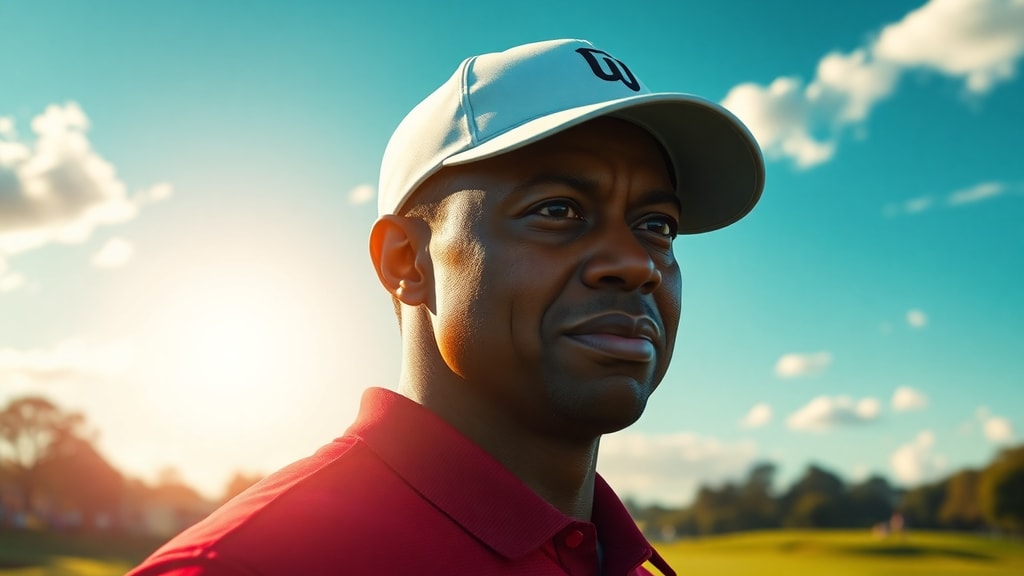
1) Introduction: Who Tiger Woods Is—and Why His Influence Exceeds Golf
Tiger Woods—born Eldrick Tont Woods in 1975—is an American professional golfer and one of the most consequential sports figures of the modern era. By the time most elite athletes are still defining their “brand,” Woods had already started redefining the sport’s economic and cultural gravity. His rise began in earnest as a junior prodigy, then accelerated into a professional career marked by a combination of rare physical athleticism, strategic course management, and an unusual mental discipline for a young competitor on a major stage.
Woods’ technical and competitive identity is often summarized in strokes and trophies, but the deeper story is structural. He dominated not only because he could hit shots from demanding lies, but because he approached golf as an optimization problem—balancing club selection, trajectory shaping, risk tolerance, and recovery routines with a level of preparation that reshaped expectations for what “elite preparation” looks like. His peak years rewired how audiences understood greatness: performance under pressure became inseparable from conditioning, data-informed practice habits, and the mental rehearsal techniques that sports psychologists now treat as mainstream tools.
Equally important is his role as a global media and sponsorship engine. Woods did not merely participate in golf’s commercial ecosystem; he helped transform it. He became a bridge between mainstream spectatorship and a high-performance sport that had previously been perceived as niche in many markets. His visibility changed broadcast logic, corporate sponsorship strategies, and the geographic reach of professional tournaments.
In short, Tiger Woods is a case study in cross-domain impact: a sporting innovator whose influence spans competitive methodology, sports marketing, and the wider institutional questions of how society elevates—then holds accountable—public figures.
2) The Catalyst: Why Tiger Woods Is Trending Again Right Now
Tiger Woods is trending in 2026 for a straightforward reason: his public narrative continues to intersect with high-stakes contemporary themes—return-to-elite competition, athlete health management, and the credibility of sports institutions—at a time when the sports world is hungry for evidence, not platitudes.
The trigger is renewed attention around his competitive status and the ongoing evolution of modern golf’s performance culture. In recent reporting cycles, Woods’ name reappears whenever there is a confluence of factors: major championship storylines, new revelations about training and medical recovery frameworks among top athletes, and the social media amplification of any moment that resembles a comeback arc—especially when fans are reminded how long Woods has been a reference point for excellence.
This kind of resurfacing is not random. When Woods shows up on leaderboards, in tournament fields, or in verified public statements, he activates multiple narrative engines at once:
When these engines align with major golf events and broader headlines about athlete wellness and performance science, Woods becomes a natural focal point for media and audience attention.
3) Deep Dive: Context, History, and the Second-Order Implications
Historical context: from prodigy to institution
Woods’ early career didn’t just change records; it changed the tempo of tournament life. His dominance made it harder for everyone else to ignore the importance of physical training and mental preparation. Golfers began to treat strength and conditioning as non-negotiable rather than supplemental. Coaches and analysts gained a stronger mandate to make training systematic.
Woods also shifted the emotional posture of spectatorship. Golf broadcasts had long been respected for their coverage style, but Woods brought a wider audience who wanted storylines, streaks, and personal stakes. This is a second-order change: greater popularity brought more sponsorship money, which brought better training resources, which in turn raised competitive standards across the tour.
Performance science: why Woods still matters
Even in periods when he is not consistently at the top of leaderboards, Woods influences how high-performance sport is discussed. Modern athletic excellence is increasingly about the integration of domains—physiology, biomechanics, psychology, and strategy—rather than isolated skills.
Woods’ publicly visible training themes over the years reinforced three ideas that now sit at the center of elite sport:
1. **The body is a system**: Recovery is not downtime; it is a performance input.
2. **Repetition must be intelligent**: Practice is valuable when it is structured around measurable outcomes.
3. **Pressure is a skill**: Woods helped normalize the concept that mental preparation can be trained like a swing.
Second-order implication: when fans and younger athletes adopt these principles, the “baseline” for elite entry rises. That affects coaching, sports medicine markets, and even equipment innovation priorities.
Technology and golf: the paradox of modern optimization
Golf is uniquely susceptible to both genuine optimization and hype. Advanced clubs, ball design, launch monitors, and swing analysis can help players refine the execution of intent. Yet Woods’ enduring legacy is that technology only matters when it serves a coherent strategy and a durable athletic base.
The paradox is this: modern tools promise certainty, but golf remains probabilistic. Woods’ career shows that excellence is still built from variance management—knowing how to respond when conditions refuse to cooperate.
Second-order implication: as technology accelerates, the public will demand accountability from both equipment brands and training services. Woods, by being such a recognizable benchmark, becomes an informal auditor. When his performance aligns—or fails to align—with a particular training or equipment narrative, the market learns.
Media dynamics and public trust
Tiger Woods is also a lens into how contemporary celebrity functions. His story is not only sports news; it is governance news—about how institutions protect athletes, how fans interpret vulnerability, and how narratives are constructed across broadcast, print, and social platforms.
Second-order implication: audiences are now less tolerant of simplistic “comeback” storytelling. They want evidence of rehabilitation, transparency about training constraints, and credible explanations for performance variability. Woods’ global status means he is held to that higher evidentiary standard.
4) Future Outlook: Bob’s Prediction on What Tiger Woods Represents Next
Looking ahead from where the sport stands in 2026, my prediction is not merely that Tiger Woods will (or will not) win specific tournaments. The deeper prediction is about his role in the ecosystem.
Tiger Woods will increasingly function as a **standards-setter** rather than just a contender. As golf’s technology and athlete-health systems mature, the next phase of Woods’ public relevance will likely hinge on how effectively those systems are translated into sustainable performance—not just momentary brilliance.
Concretely, I foresee three outcomes:
Tiger Woods is trending because the world is watching for proof that modern excellence can be both powerful and durable. In an era of instant content cycles, Woods remains a rare figure whose story still demands sustained, evidence-driven attention.
That is why he endures—why he will keep reappearing in headlines when the sport most needs a benchmark for what greatness really costs, and what it requires to last.