The Tomodachi Life Update Nobody Expected: Why Nintendo’s Virtual Friendship Simulator Still Feels Ahead of Its Time
Published: June 26, 2026
1) Introduction: What *Tomodachi Life* Actually Is (and Why It Matters)
As a global trend journalist, I’m often asked why a game as playful—and in some ways as deliberately weird—as *Tomodachi Life* keeps resurfacing in conversation. The reason is simple: *Tomodachi Life* is not just a novelty life-sim. It is a tightly designed experiment in “social play,” built around a core premise: you bring people into a world, and the world reacts to them through routines, dialogue, and emergent relationships.
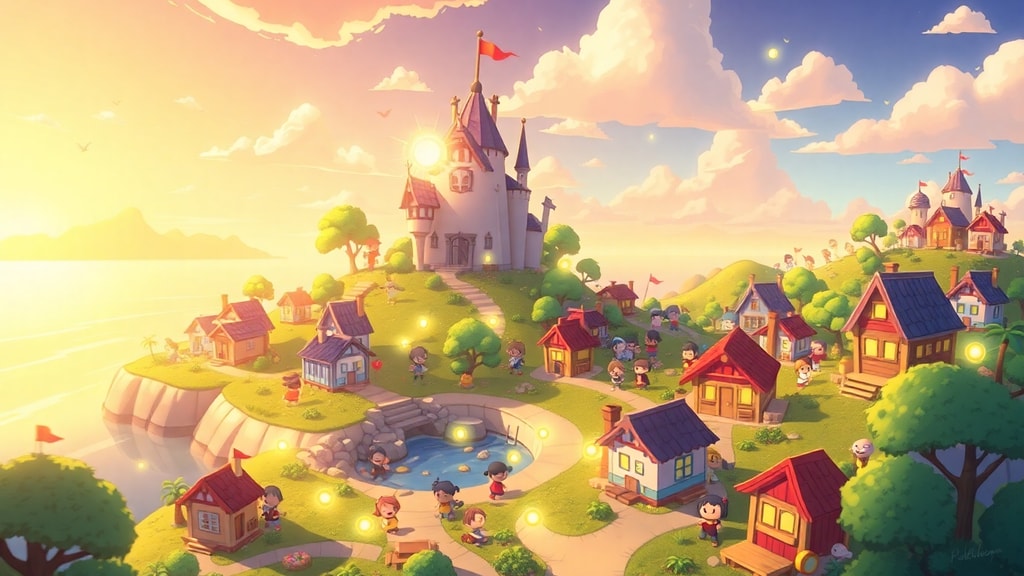
Originally released in Japan for the Nintendo 3DS and later expanded for international audiences, *Tomodachi Life* is a family-friendly simulation game where players create Miis—Nintendo’s customizable avatars—then place them on a fictional island. On that island, those avatars behave like semi-autonomous residents. They eat, wander, converse, fall into moods, and sometimes deliver the kind of comedic misunderstandings that only happen when a system tries to simulate human social dynamics without ever pretending to be perfectly human.
The update conversation—what many fans now refer to as a “tomodachi life update”—matters because Tomodachi Life’s charm depends on its loop: create, watch, interpret, and intervene. The game’s humor comes from friction: the gap between what a player *intends* and what an algorithmically driven friend *does*. That makes each new feature—new dialogue patterns, revised mechanics, additional content, or even quality-of-life changes—feel larger than it sounds. It changes the “social weather” of the island.
In other words, *Tomodachi Life* is a microcosm of a broader genre: social simulation. But it has a distinctive approach. Rather than focusing on strategy, building systems, or competitive outcomes, it focuses on everyday interactions. It’s closer to an interactive story engine than a traditional game, and because it runs on the 3DS ecosystem, it carries a unique cultural layer: a period when handheld gaming doubled as a personal, private space where friendships, inside jokes, and “roleplay memories” could develop.
2) The Catalyst: Why the “Tomodachi Life Update” Topic Is Trending Right Now
So why is a *Tomodachi Life update* suddenly trending again—years after the game’s initial release and after the 3DS era began to recede?
The trigger is not one single announcement; it’s a converging set of signals: heightened community activity, resurfacing clips of island moments, and fresh speculation fueled by social platforms. In recent weeks, multiple factors have made the topic “feel” alive:
1. **A renewed wave of player-generated storytelling.** Short-form video platforms have continued to reward “emotion + absurdity” content—exactly what Tomodachi Life produces. Each clip reignites curiosity: if players can still create such rich moments, what could a newer version do?
2. **The cultural endurance of Miis and the return of nostalgia-driven demand.** Miis have remained a recognizable Nintendo identity, and nostalgia has become a measurable market force. When players see that their personal avatars can still be made and shared, they naturally ask for the next step: more content, better tools, and updated experiences.
3. **Community clue-chasing around platform cycles.** As Nintendo’s hardware roadmap evolves, fan communities often interpret gaps and “silence” as potential opportunities—particularly when other long-tail franchises receive remasters, updates, or ports. Even without official confirmation, “update” becomes shorthand for “something might be coming.”
4. **The broader mainstream conversation about social AI and simulation.** Even when unrelated, the rise of conversational AI in everyday products has made people rethink what social simulations can be. That context makes Tomodachi Life feel unexpectedly relevant again.
The net effect is this: *Tomodachi Life update* is trending not because a single headline dropped, but because the game’s format—social, personal, interpretive—now sits at the intersection of nostalgia, community virality, and society’s renewed appetite for conversational, character-driven experiences.
3) Deep Dive: Historical Context, Analytical Stakes, and Second-Order Implications
Tomodachi Life debuted at a time when Nintendo still took bold risks with whimsy. Its historical significance lies in its refusal to behave like a typical simulation. In many sims, the player is the manager—building systems and optimizing outcomes. Here, the player is closer to a curator of social chaos.
Historical background: from Mii creativity to relationship emergence
Nintendo’s Mii concept had been circulating in multiple formats, but *Tomodachi Life* operationalized that creativity into a deeper relationship sandbox. The island doesn’t simply display characters; it nudges them into interactions. Players don’t only “watch”—they learn the island’s behavioral logic and begin to understand how to influence events indirectly.
That approach foreshadows modern user engagement strategies: create systems with enough unpredictability to keep observers returning. But Tomodachi Life did this long before “live service” became a default expectation.
Why an “update” would be more than content
When fans ask for an update, they’re not only asking for more things to do. They’re asking for updates to the *social engine*—the part of the game that governs timing, dialogue flavor, relationship progression, and the subtle comedic rhythm.
Even minor tweaks could carry outsized consequences:
Second-order implications matter here. If an update improved the social engine, it would likely increase user retention and content creation. Social simulation games live or die by their shareability. Tomodachi Life’s comedy is inherently clip-worthy. A stronger system would yield more “repeatable” moments—more reasons for players to post and for viewers to look up the game.
The competitive landscape: why social sims are returning
The entertainment industry is again prioritizing character-driven, relationship-forward experiences. Whether through open-world companions, social crafting, or conversational avatars, players increasingly want emotional texture rather than raw difficulty.
In that context, a Tomodachi Life update—especially one that modernizes user interaction—would signal that Nintendo understands the genre’s renewed momentum. Even if Nintendo never uses the term “social simulation,” the underlying demand is visible across games and platforms: people want systems that can respond to personality.
4) Future Outlook: Bob’s Prediction on What Happens Next
Here is Bob’s forward-looking prediction, grounded in what Tomodachi Life represents rather than what rumors merely hope for.
If Nintendo or any publisher extends Tomodachi Life’s model, the most likely “update” will not be a mere expansion of tasks. It will be an upgrade to the *social engine*—making characters feel more responsive, less repetitive, and more capable of producing story moments that remain surprising even after dozens of sessions.
But there’s a deeper bet: I expect the next evolution of Tomodachi-style gameplay to lean into community loops—sharing, collaboration, or curated social artifacts—so that islands don’t only belong to individuals; they become cultural objects. In the near future, players will treat these worlds the way they treat short narratives: building identities, posting reactions, and collectively discovering what the system can do.
So whether the next “tomodachi life update” arrives officially, indirectly through ports or enhancements, or through spiritual successors, the direction is clear: social simulation is shifting from private amusement to networked storytelling. Tomodachi Life has been practicing that instinct for years—and that is why, even now, it feels trending rather than forgotten.