Western: From Cultural Genre to Global Software of Meaning
Published: June 27, 2026
1) Introduction: What “Western” Really Is
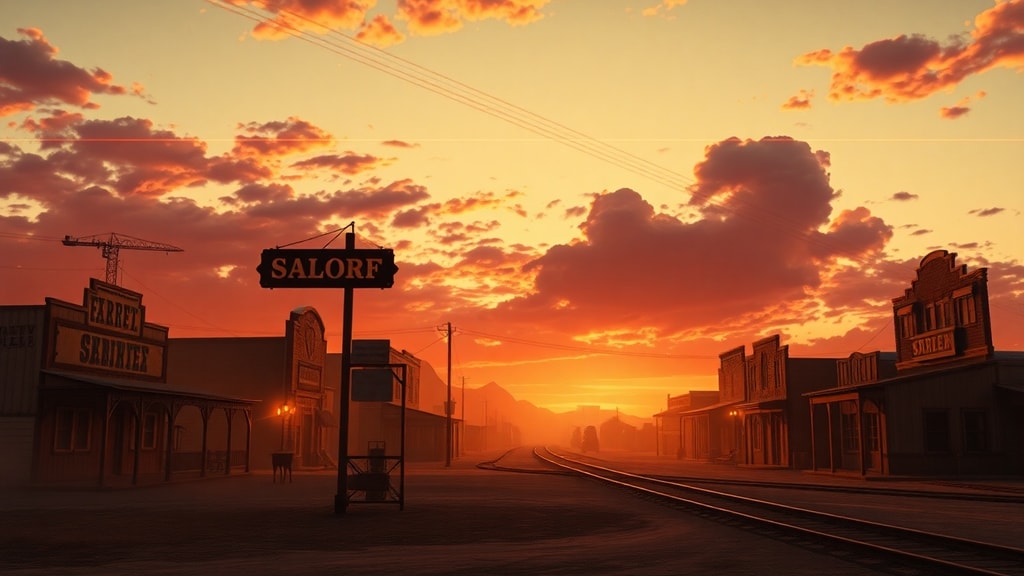
“Western” originally describes a specific genre: stories set in the frontier regions of the United States—especially the late 19th century—featuring cowboys, lawmen, outlaws, ranch life, trains, deserts, saloons, and moral showdowns under harsh skies. In its classic form, the Western is not merely a backdrop; it is a repeatable narrative machine. The genre typically organizes plot around a central conflict between civilization and wilderness, order and chaos, and individual freedom versus collective law.
But “Western” is broader than a checklist of settings. In global cultural practice, the word has come to operate as a shorthand for a constellation of ideas about authority and legitimacy. It includes the Western hero (often a lone gunfighter or principled sheriff), the Western antagonist (a gang leader, corrupt official, or rival faction), and a moral grammar where violence is both feared and—at times—rendered meaningful. The Western’s distinctive visual language—wide landscapes, long shadows, dust, sparse dialogue, and iconic costume silhouettes—translates into recognizable emotional cues.
Importantly, “Western” is also a historical record of how societies projected their fears and ambitions onto frontier mythology. The genre emerged in a period when industrialization and urbanization were reshaping life; frontier stories offered both nostalgia and a working metaphor for reinvention. Even when filmmakers moved away from historical realism, the genre kept a powerful promise: that meaning could be distilled into stark choices.
In the modern era, “Western” increasingly refers not only to films and novels but also to a portable cultural code used across media—from prestige television to streaming binge culture, from blockbuster animation to interactive games. This code travels easily because it’s structured around universal tensions: safety versus freedom, belonging versus domination, and myth versus law.
2) The Catalyst: Why “Western” Is Trending Right Now
“Western” is trending because contemporary entertainment markets are in a rare moment of genre retooling. Several converging forces are driving attention.
First, streaming platforms have encouraged “event viewing,” where audiences return to familiar story frameworks with fresh interpretations. Westerns, once seen as niche or old-fashioned, now function as high-visibility vehicles for character-driven drama. Creators can deliver familiar archetypes—sheriff, outlaw, displaced family, brutal frontier economy—while subverting who gets to occupy the hero’s seat.
Second, video game design has revived frontier mechanics as a kind of interactive mythmaking. Open-world titles and narrative quests translate the Western’s geography—roads, outposts, hostile territories—into gameplay systems. That interactivity produces a feedback loop: audiences don’t just watch the West; they inhabit it, which increases cultural salience.
Third, broader social and political conversations have intensified scrutiny of historical myth. In many countries, viewers are asking: Which stories were used to justify power? Who was excluded from the “civilization” narrative? That debate makes Westerns newly relevant because frontier legends often come bundled with claims about justice, progress, and national identity.
In short, the Western is trending right now because it sits at the intersection of platform economics (streaming and interactive media), audience appetite for reinvention, and a global reckoning with whose myths get promoted.
3) Deep Dive: Analytical Context, History, and Second-Order Implications
Historical Context: The Western as a Moral Technology
The classic Western is often treated as entertainment, but it behaves like moral technology. It trains viewers to interpret threat and authority in certain ways: the hero must act decisively; law can be imperfect but is ultimately the target; violence is a language that—when correctly used—restores equilibrium.
Over decades, the genre has gone through transformations that mirror societal shifts. Early Westerns frequently emphasized conquest, manifest destiny, and a simplified moral landscape. Later, the “revisionist Western” challenged those assumptions. Characters became more ambiguous, institutions more corrupt, and violence less cleanly justified.
This evolution is crucial: it shows that the Western has never been static. It is a genre capable of reflecting the anxieties of each era—whether that anxiety is about labor, expansion, race, class, technology, or legitimacy.
Why the Modern Western Feels Different
Today’s most compelling Westerns tend to treat the frontier not as a stage set but as an ecosystem of competing interests: land, water, commerce, religion, policing, and inter-community trust. The West becomes a system of governance and a market of survival.
Creators also increasingly diversify the perspective. The “other” of the classic Western—Indigenous communities, immigrants, women, enslaved people, non-heroic laborers—moves from background decoration into narrative center. That shift changes structure. If someone other than the white male lawman is the protagonist, then what counts as “justice” and “civilization” can be reframed.
Second-Order Implications: How the Western Shapes Real-World Thinking
When a culture repeatedly tells frontier stories, it influences public intuition about legitimacy and violence. Even if viewers claim to enjoy Westerns only as fiction, the frameworks can leak into how people talk about conflict and authority.
Here are the second-order effects worth watching:
1. **Normalization of selective justice:** Western narratives can imply that the law is sometimes best handled through exceptional personal force. Modern reinterpretations may critique this, but the underlying temptation remains.
2. **Myth-driven policy aesthetics:** Political speeches and viral content sometimes borrow frontier rhetoric—“bringing order,” “tough action,” “protecting the frontier”—creating a shared emotional vocabulary that can bypass nuance.
3. **Spatial imagination:** The Western teaches audiences to read geography as destiny. Towns become moral islands; deserts become judgment zones. That spatial thinking can affect how people perceive risk and governance in remote places.
4. **Technological re-enchantment:** In contemporary versions, modern technology can be fused with frontier myth—railroads echoed in logistics stories, surveillance echoed in law enforcement tropes. This blending can make complex policy issues easier to digest as narrative.
5. **A new global West:** International creators adopt Western codes while changing cultural details. The result is not a single Western but many Westerns—relocalizations where the frontier could be a different landscape, a different era, and a different group’s struggle for autonomy.
The “Western” as a Marketing Category
From an industry standpoint, “Western” is appealing because it offers strong brand recognition: audiences know what they’re buying (even when they want subversion). The genre’s iconic visual grammar reduces marketing uncertainty. Yet the trend now is that brands are looking for novelty—so modern Westerns must feel “classic” in aesthetic while “new” in worldview.
That balance—familiar surface, re-architected moral logic—is where today’s Western renaissance lives.
4) Future Outlook: Bob’s Prediction on Where “Western” Goes Next
The Western will not fade; it will mutate. My prediction is that “Western” will increasingly function as a global narrative template for boundary conflicts—territorial, cultural, economic—rather than a narrowly American historical genre.
In practical terms, expect three developments:
1. **More transnational Westerns:** Creators will borrow Western codes to tell stories about borderlands across continents—substituting the frontier with new landscapes of migration, resource extraction, and contested governance.
2. **Hybrid formats dominate:** The strongest Western franchises will combine long-form storytelling with interactive elements—episodic series paired with game-like narrative choices, or vice versa—because interactivity makes moral ambiguity feel experiential.
3. **Myth becomes metadata:** The West’s symbols—badge, revolver, livery, dust, rail—will be treated as reusable “metadata” for themes like accountability, restitution, and institutional failure. The genre will increasingly ask audiences not just “Who wins the duel?” but “Who gets to define reality afterward?”
In other words, the next era of Western will be less about the romance of the frontier and more about the politics of interpretation. The West has always been a debate dressed in costume. Now, it’s becoming a debate that audiences can actively participate in—and that is exactly why it’s trending.